
When is the best time to visit Shetland?
Why June is a favourite month in Shetland, and what winter brings, including Up Helly Aa.
Words by Laurie Goodlad
I’m asked this question a lot and, for me, it’s an easy one. Hands-down, my favourite month is June, and I will tell you five reasons why below. But, any month in summer is worth a visit and July and August can bring fine weather too. If you can’t tolerate the cold, July and August are the warmest months with our highest average temperature of 13 degrees Celsius (two degrees higher than the June average).
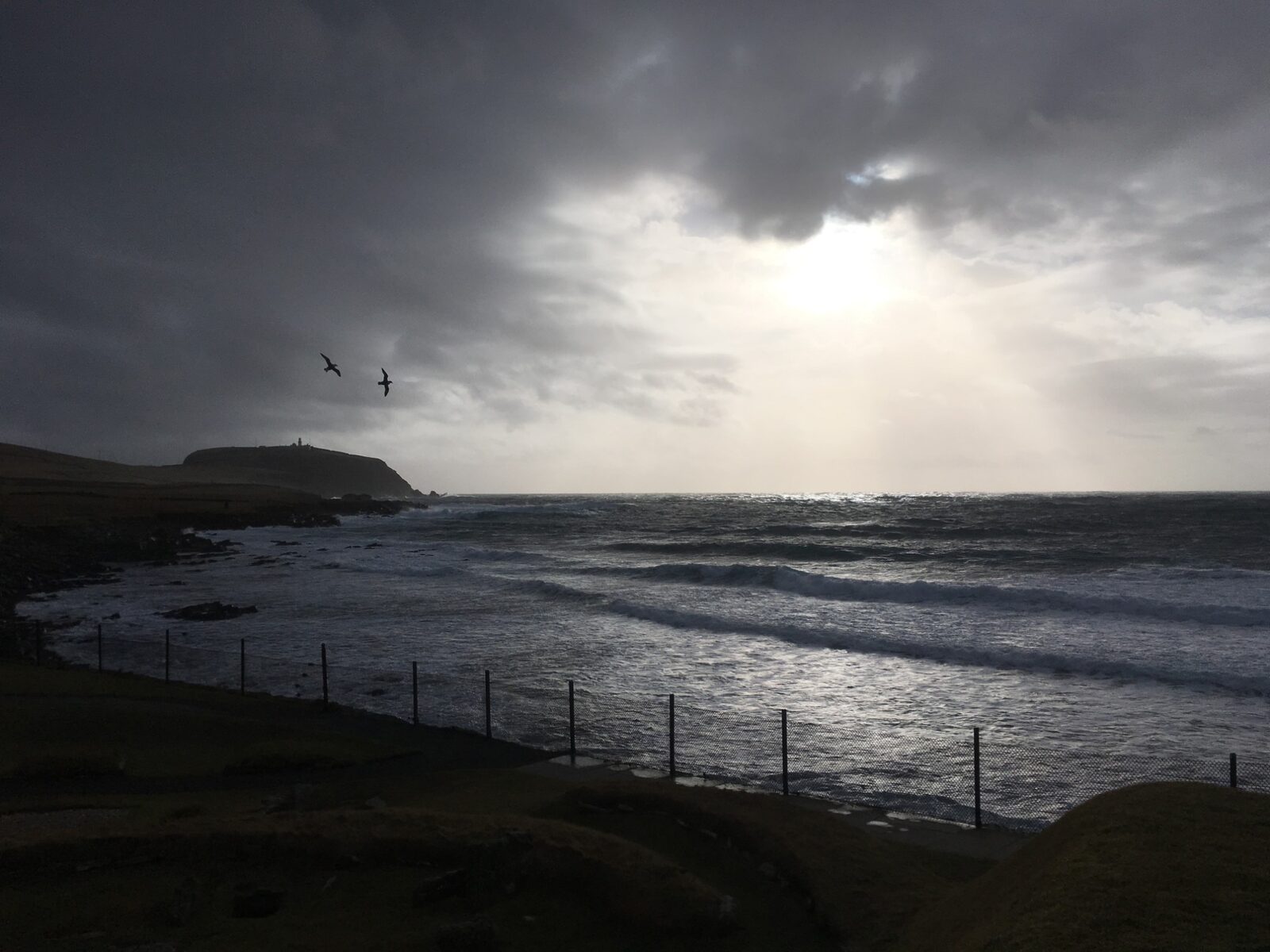
It’s easy to say that summer is the best time to visit – don’t all destinations say this? However, winter can be a fantastic time to visit and get a real sense of the place without any of the summer frills. Shetland is raw and powerful in winter and, for the hardy, this can be a great time to visit. If you want the best winter experience, arrive in late January and let your trip coincide with the annual Up Helly Aa winter fire festival, inspired by the islands’ Viking past. January is the coldest month, and although the average temperature is recorded at six degrees Celsius, the ever-present wind chill will make it feel much cooler. Winter can be an excellent time to see the northern lights, and Shetland is the best place in the UK to see them (although it is never a guarantee that you will spot them). You’ll need to pack a lot into a few short hours of daylight though as Shetland spends 18 hours a day in darkness at this time.
Let’s move back to June and think about why, for me, this is the best month to visit Shetland:
The seabirds have returned
Over one million nesting seabirds return to their noisy colonies every summer, nesting on cliffs, moors, beaches and, even within the walls of a 2,000-year-old broch, their return is a welcome sight after a long winter. June is a hopeful time for the seabirds as they prepare their nests and begin the process of incubating and hatching out an egg. Common seabirds in Shetland are puffins (known locally as Tammie Nories), gannets (solans), Arctic terns (tirricks), shags & cormorants (skarfs), fulmars (maalies) and great skuas (bonxies).
The wildflowers are out
Shetland has an abundance of wildflowers, and June is a great month to see them. The roadsides, ditches, meadows and clifftops are a riot of colour as summer puts on her best colours. The road verges are a perfect place to see the variety of wildflowers, protected from sheep, they line the roads and brighten any journey.
Land of the simmer dim
Shetland is the land of the summer sun, and June is when Shetland is bathed in more daylight than any other month. With 19 hours of light, it’s hard not to fall in love with the isles. The Simmer Dim (summer solstice) happens at the end of June. At this time, the sun merely dips her head beneath the western horizon, before rising once more.
A promise of summer
In June, Shetland is filled with the promise of summer, the optimism of fine weather and long months spent out of doors is palpable in the air. June is a time when the days are still lengthening ahead of the solstice, and this in itself brings an excited urgency to the days here. Living here, it’s hard not to think of the days after the solstice as the beginnings of a steady march towards the darker winter days.
Cheaper travel
It can be expensive to get to Shetland, especially in the summer. However, June may be a slightly cheaper option because it is before the schools’ summer holidays (July-August). Shetland schools usually break at the end of June and, as more families are travelling, prices often rise during this period. It’s worth checking prices before you commit.
 Out now
Twice a year, to your door
One hundred and sixty pages of Scotland, every photograph commissioned, every word written by someone who went. Members get both issues posted and everything on screen.

 The Last Stop Before Nowhere
 A Weekend Exploring the Isle of Mull
 What's On in Scotland: Autumn and Winter