
What’s the best way to get to Shetland?
The NorthLink ferry from Aberdeen or a Loganair flight: the pros and cons of each.
Words by Laurie Goodlad
Getting to Shetland is easy enough, and you can travel into the isles by plane or boat. Some careful planning is needed to ensure that connecting flights can fit together and ensure that you are securing the cheapest deal.
You can fly to Shetland from most international airports in Scotland although there are only several flights a day so you may have to overnight before travelling on. The boat to Shetland leaves from Aberdeen, so you may need to factor in the time and cost for travelling to Aberdeen. Aberdeen is well-served by bus and rail links, as well as an international airport.

There are pros and cons to arriving by air and sea, and these will be discussed below.
By sea:
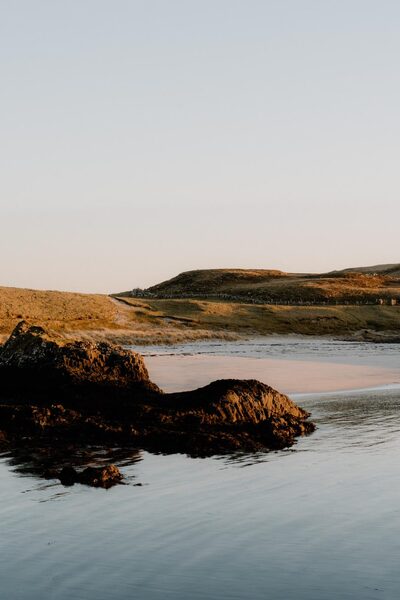
The first option for getting to Shetland is by boat. This service is run by NorthLink Ferries. Bookings can be made via their website. Two boats operate this life-line service, the Hjaltland and Hrossey, running between Lerwick and Aberdeen daily and passing each other on their passages north and south. The journey times vary between 12 and 14 hours (depending on whether or not the boat calls in at our island neighbour, Orkney 50 miles to the south-west).
Pros:
It’s generally cheaper to travel by boat, particularly if you are travelling in a family group.
Travelling by boat is more relaxed – particularly if travelling with children – and there are no airport waits.
You can take your vehicle, bike, motorhome with you.
Pets are welcome. The boat has kennel facilities and dog-friendly cabins.
There are various options to suit differing budgets. Cabins (four-berth, two-berth and shared) are available, and if you’re a budget traveller, sleeping pods are a much cheaper option, although you will need to bring a sleeping bag or blanket (and the lounge areas get pretty cold during the night).
There’s a restaurant, bar, shop, cinema and children’s play area and it’s kitted out nicely to a high spec.
The staff are also extremely polite, friendly and helpful, and the bar is open till 1 am.
It feels like a mini-cruise to start your holiday.
You could see some fantastic wildlife – dolphins, porpoises and perhaps a whale (if you’re extremely lucky). There are plenty of seabirds to spot all year round, so wrap up warm and get out on the deck.
Cons:
If you don’t have very good sea-legs and the weather is bad, you may be in for a long night of seasickness.
Crossings can be rough – particularly in winter.
Windy weather can delay or halt sailings (check the website for sailing updates before departure).
It takes a long time – 12-14 hours each way – that’s a full day on a return trip (although it is overnight).
Although it may appear cheaper, once meals (and maybe drinks) are factored in, you’ve probably spent as much as the plane would have cost. Those who are organised and money-savvy can bring food on board, but the smell of fish and chips wafting from the Feast Restaurant is too much for those with any food weakness.
By air:
Flights in and out of Shetland are fairly straightforward from all the main Scottish airports. Loganair operates daily flights to and from Aberdeen, Edinburgh, Glasgow, Inverness & Orkney. Additional flights operate in the summer to Manchester, London and, sometimes, you can get a weekly service to Bergen.
Undoubtedly, this is the quickest option (if all goes to plan). Flights take between an hour and an hour-and-a-half (compared to the 12-14 on the boat). However, this is not always the most reliable way to get here (or away), and, as any islander will probably confirm, if you want to avoid the risk of lengthy delays and cancellations, take the boat.
Pros:
Quick flight times (1 to 1.5 hours).
If booking well in advance, it can be cheaper than the boat. But beware, the price goes up as the date to fly approaches.
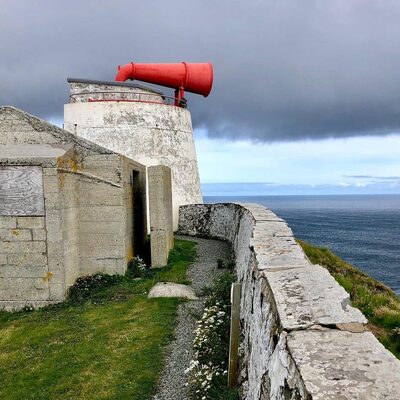
The Sumburgh Airport approach is exceptionally dramatic as you fly in over the spectacular cliffs of Sumburgh Head.
It can allow you more time to enjoy Shetland, rather than spending hours on the boat trying to get here.
Cons:
The single greatest drawback has to be the fact that technical issues frequently hamper the service, and many flights are delayed or cancelled.
Fog can be a real problem, particularly in the summer months as sea fog rolls in off the North Sea.
You are limited in the amount of luggage you can carry and should always check the luggage allowance before flying as it is generally always lower than other airlines.
The small planes that often land in windy weather can be a bit hair-raising for those who aren’t great flyers.
It can be costly for flights to and from Shetland.
 Out now
Twice a year, to your door
One hundred and sixty pages of Scotland, every photograph commissioned, every word written by someone who went. Members get both issues posted and everything on screen.

 The Last Stop Before Nowhere
 A Weekend Exploring the Isle of Mull
 What's On in Scotland: Autumn and Winter