
Unravelling the mysteries of the Touchstone Maze in Strathpeffer
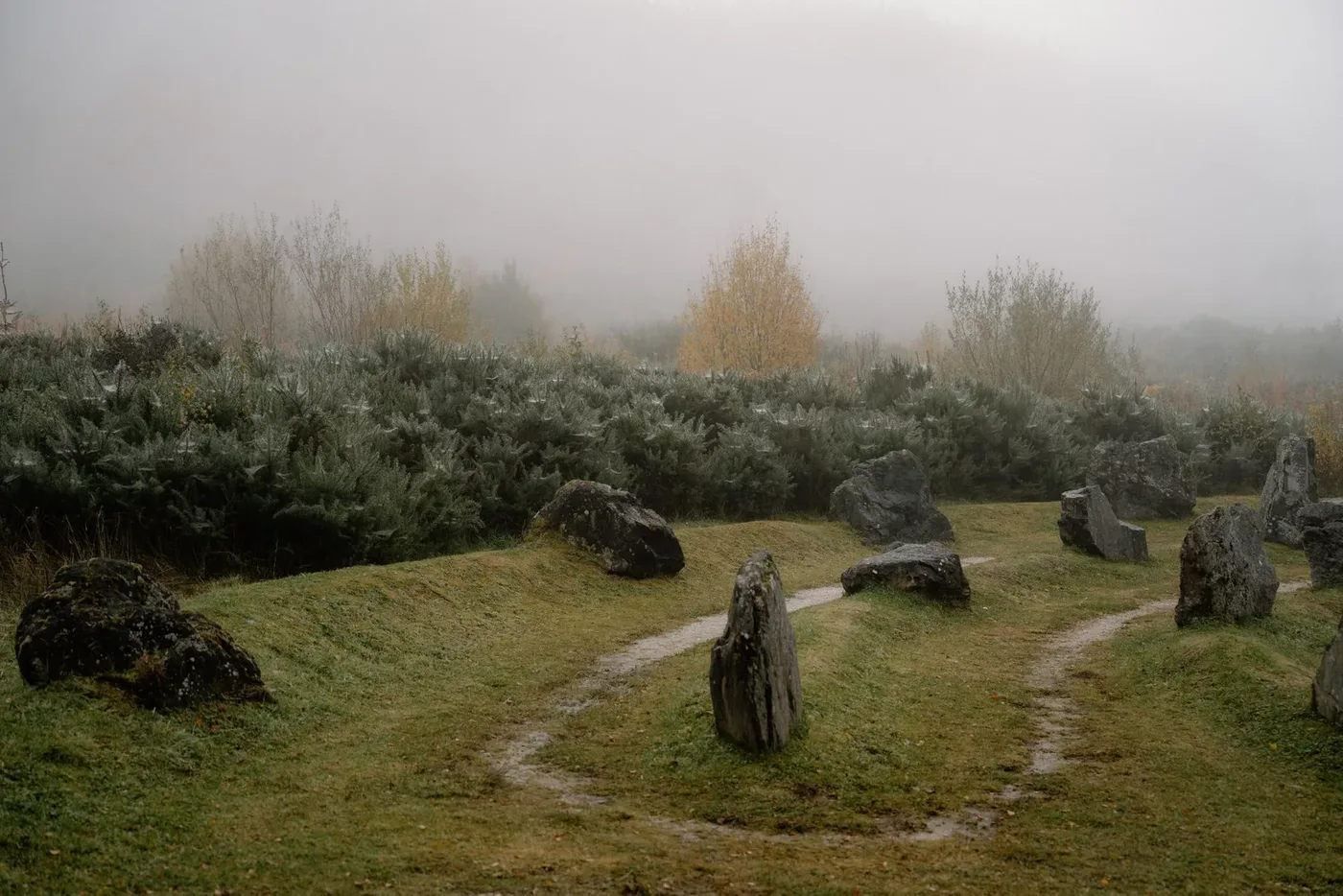
The Touchstone Maze above Strathpeffer.
Words by Hidden Scotland
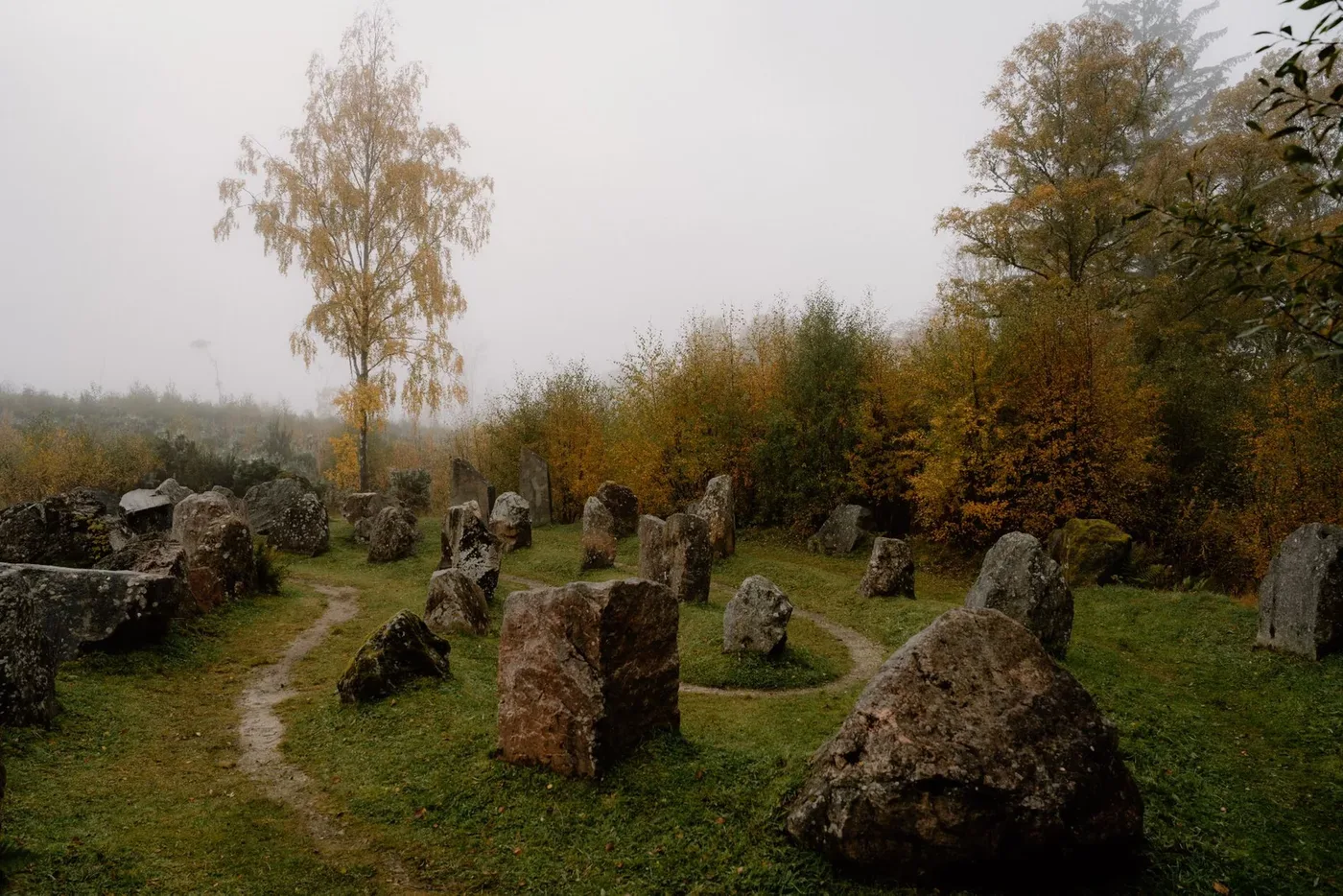
Above the Highland town of Strathpeffer, near Knockfarrel Hill, lies the Touchstone Maze. Constructed in 1995, the labyrinth spans 25 metres in diameter and is comprised of 81 large rocks sourced from quarries scattered across the Scottish Highlands and Islands. The design of the maze follows prehistoric patterns, bringing geology and astronomy together in a unique creation.
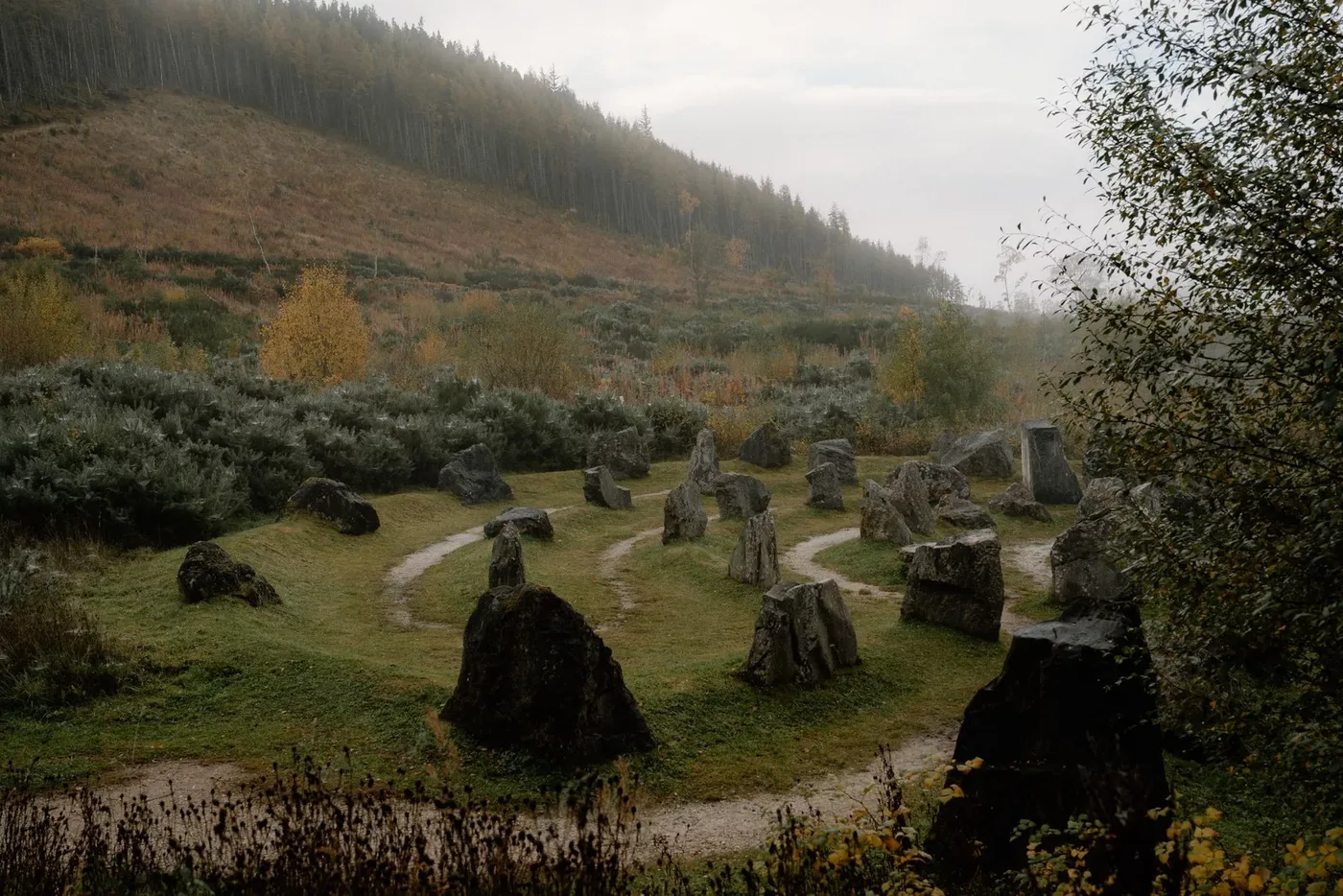
Much like ancient stone structures, the Touchstone Maze incorporates alignments with the movements of the sun and moon. At the entrance of the maze, two distinctive megalith outliers stand as guardians. The pointed stone outlier, located to the left when facing the maze, aligns precisely with the mid-summer sunrise. Its shadow, cast at daybreak, gracefully extends to the centre of the maze, creating a striking play of light and shadow. On the other hand, the rounded stone outlier positioned to the right is oriented to capture the most northerly moonrise. When the moon graces the night sky from its farthest northern point, the stone’s shadow reaches the very heart of the maze. From the centre of the maze, these megaliths serve as markers, pinpointing the horizon where the midsummer sunrise and the most northerly moonrise occur.
The rocks used in the construction of the Touchstone Maze bear witness to the ever-changing geological history of the Scottish Highlands and Islands. The region’s rocks can be classified into three primary groups: sedimentary rocks formed through the deposition of eroded materials; igneous rocks created from solidified magma within the Earth’s crust, including granite and volcanic lava flows; and metamorphic rocks resulting from the recrystallisation of existing rocks due to intense heat and pressure during geological events such as plate collisions and volcanic activity. Common metamorphic rocks in the area include slate, phyllite, schist, and gneiss, arranged in order of increasing alteration.
The geological origins of these rocks range from the ancient Lewisian rocks, heavily altered metamorphic formations found in the Outer Hebrides and the Northwest coast, dating back around 3 billion years, to the relatively young Jurassic sediments along the east coast, hailing from the time when dinosaurs roamed the Earth, approximately 150 million years ago. Intruding into these foundational rocks are various types of igneous rocks, once molten, which emerged along the margins of the moving crustal plates that comprise the Earth’s surface.
The Touchstone Maze brings the geology of the Highlands and Islands and the movements of the sun and moon together in one place, among its concentric circles.
 Out now
Twice a year, to your door
One hundred and sixty pages of Scotland, every photograph commissioned, every word written by someone who went. Members get both issues posted and everything on screen.

 The Last Stop Before Nowhere
 A Weekend Exploring the Isle of Mull
 What's On in Scotland: Autumn and Winter