
A day in Scalloway
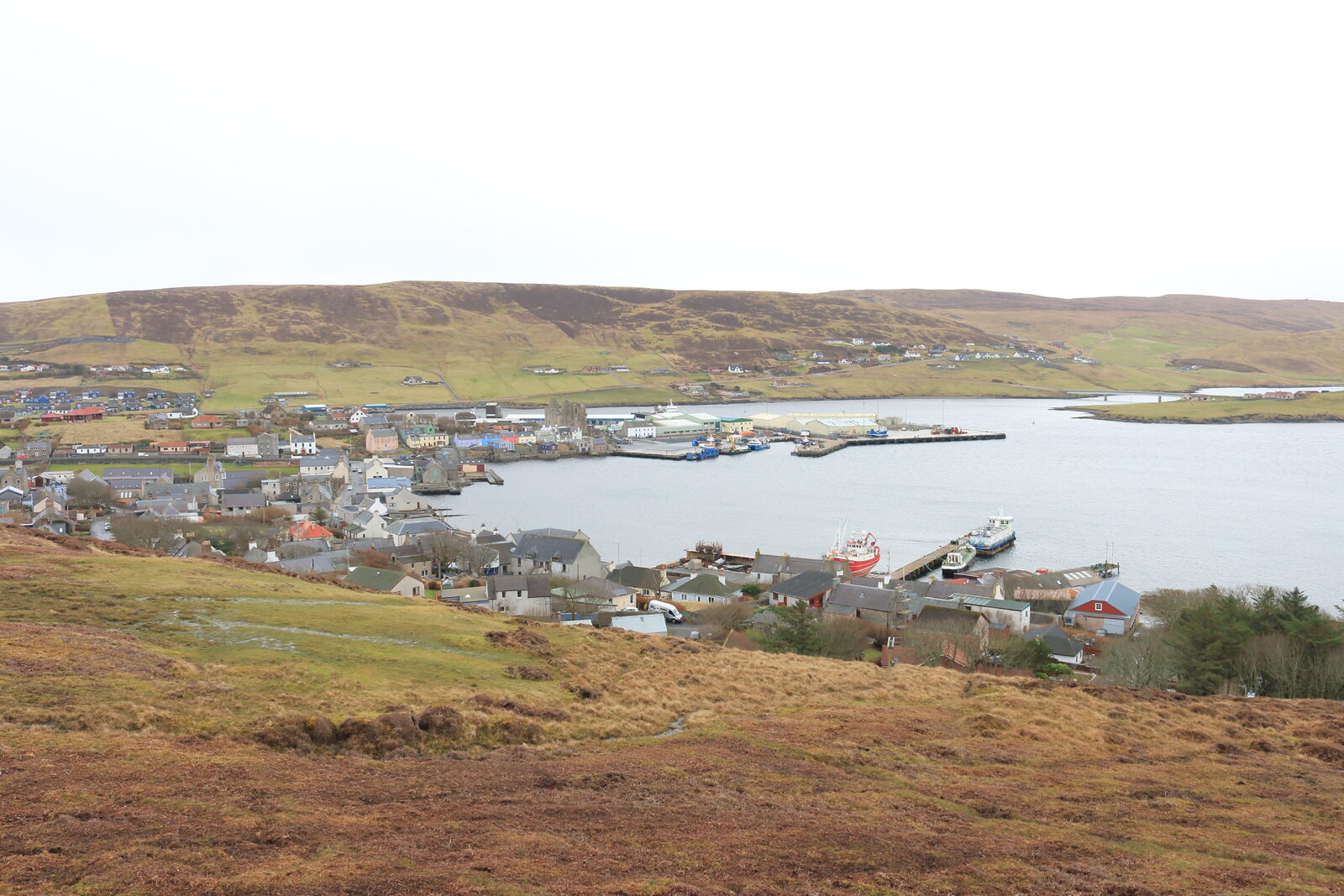
Scalloway, Shetland’s former capital, from the Gallow Hill walk to the castle and museum.
Words by Laurie Goodlad
Scalloway, sitting under the Gallow Hill, on Shetland’s west coast, is a picturesque village about six miles from Lerwick. With a thriving local community and a population of about 1,200, the village has a school, swimming pool, castle, several shops and eateries and an excellent museum that walks visitors through Scalloway’s fascinating history.
Scalloway’s welcome sign calls it the ‘Ancient capital of Shetland’. It was the capital, but not in ancient times: it remained the main administrative centre of Shetland until the 1830s.
This is a one-day itinerary for Shetland’s largest village, Scalloway.
Scalloway was Shetland’s capital until about 1838, when Lerwick was undergoing massive growth with a booming fishing industry bringing plenty of foreign trade. The influence of Dutch fishermen led to this considerable – and quick – expansion of the town and, by the early 19th century, Lerwick had overtaken Scalloway as the main economic centre in the islands.
Scalloway was an ideal location to live, with a large and sheltered natural harbour. The village sits at the foot of the fertile Tingwall Valley, providing rich agricultural land. There is good access to fresh drinking water, flat land to build, and the surrounding hills protect the village from the worst of the winter’s winds. The harbour gives good access to some of the islands’ most productive fishing grounds, and the shelter of the outlying islands supports a thriving fish-farming industry.
The village’s history is all there to find when you visit. If you’ve just arrived, or you’re staying in one of the quirky self-catering cottages, you’re sure to be hungry, so the first thing you’ll want to do is find breakfast.
Self-catering options
Ingrid’s self-catering. Set in the middle of the village with unrivalled views out to sea, this two-bedroom chalet has a real peat burning stove and an adequate supply of peat to keep your toes warm for the duration of your stay.
The Sheiling self-catering is a traditional cottage set on Main Street with an open plan living area and two bedrooms close to local amenities.
Breakfast Options
What better way to start the day than tucking into a full Scottish breakfast served with a side of Irish charm. Yes, you read that correctly; you’ll experience the best of Irish hospitality at The Cornerstone Restaurant/Cafe run by Terry and Grace McCaffrey, who always welcome guests with a smile.
Top tip: The Cornerstone is also a bed and breakfast, so if you prefer your accommodation with breakfast included, be sure to book one of their modern and clean rooms overlooking the harbour.
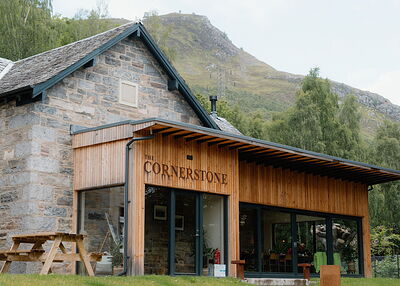
Like many of the buildings around Scalloway, the Cornerstone was built using granite from Hildasay, an island to the west of Scalloway. The uninhabited island was extensively quarried throughout the 19th century, and granite was shipped as far as Australia, where the town hall in Adelaide was reputedly constructed using Hildasay granite.
Gallow Hill
After breakfast, the best way to start the day is to walk up a hill.
The Gallow Hill looms over Scalloway, offering protection from the weather and giving Scalloway its endearing name – ‘the haven under the hill’.
The name suggests a much more sinister past that you can explore on this walk. Gallow Hill was historically a site of execution, particularly for witches who, in Shetland, were executed and burned at the Gallow Hill in Scalloway.
Each area of Shetland had its own place of execution – or gallows – but Scalloway remained the favoured location for witch trials given that the main court of the 17th century was held in the Scalloway Castle, which now stands as a roofless ruin. Place-name evidence suggests no less than 14 Gallow Hills throughout Shetland. Shetland’s justice system became more centralised under the Stewart Earls – who we will hear more about – and executions were carried out at Scalloway’s Gallow Hill, and the local gallows ceased to be used.
According to oral tradition, Barbara Tulloch and her daughter Ellen King were the last witches burned on Scalloway’s Gallow Hill around 1700. Like many more before them, Barbara and Ellen were burned at the Gallow Hill after being strangled.
There are two ways up. The quicker one climbs from Hillside Road by a stile and follows the sheep ‘gaets’ [paths], steep and uneven.
The other passes the North Atlantic Fisheries College to an access road that leads to a lighthouse, also a fine walk, and is gentler, if longer.
From the ridge by the communications mast, there are spectacular views east across Scalloway and south towards the small isles of Oxna, Papa, Hildasay and Langa and the sweeping finger of the South Mainland.
Close to the mast is where the 17th-century witches were executed and burnt. Today there are no visible remains of the site, although local knowledge and photographs have allowed us to pinpoint the position.
History and witchcraft aside, this is a spectacular place to sit and contemplate the beauty of nature that surrounds you.
Main Street points of interest
Shetland Bus sites; Memorial, Dinapore House, Norway House, St Olaf Slipway.
Church of Scotland.
Walter & Joan Gray Home – the man who formerly owned this building worked for the Marconi Company on the evening Titanic struck ice. Walter Gray, originally from Scalloway, took the distress call that night.
Lunch
Hungry? There are several options, including the KB. The KB is on Scalloway’s Main Street, right on the water’s edge. It’s a pub restaurant with a fantastic community feel – and the perfect pub grub to boot.
Other options include:
The Cornerstone
Da Haaf Restaurant
Pick up a picnic from Scalloway Meat Company or The Checkout – be sure to try a Johnson & Wood (Voe Bakery) pie; they’re unbeatable.
Scalloway Museum
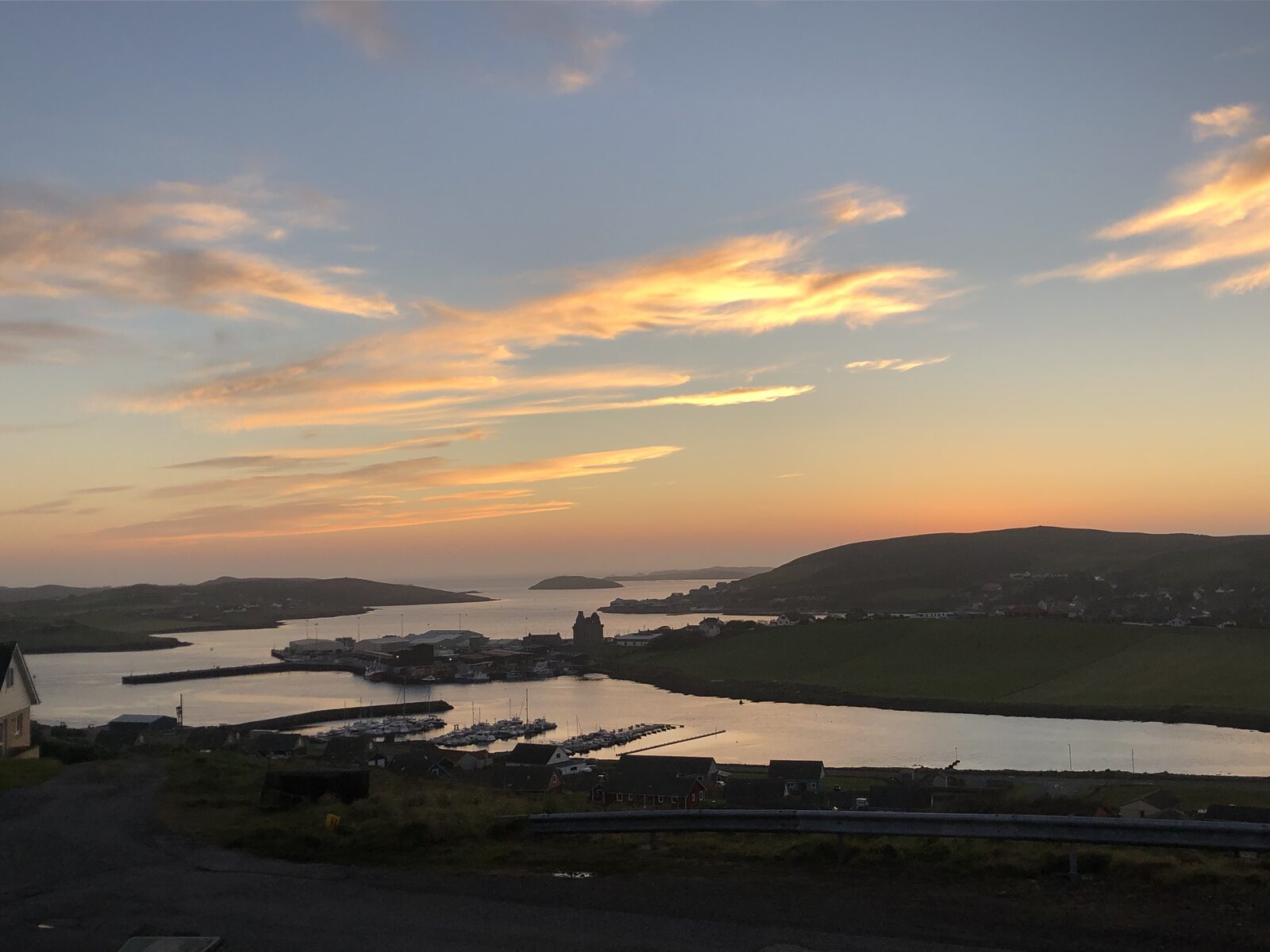
Spend the afternoon at Scalloway Museum and the castle.
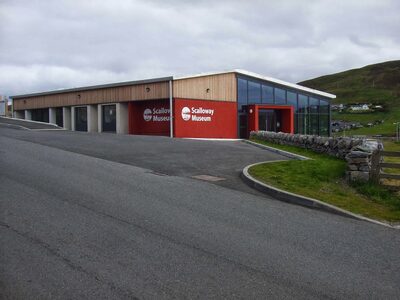
Scalloway Museum, situated beside the Castle, is a fascinating local history museum focusing on the area’s social and economic history. The museum also has extensive displays about the history of the Shetland Bus Operation.
Scalloway was the Shetland base for the Shetland Bus operation during the Second World War. In 1940, Nazi troops invaded Norway, and from that moment until the war ended in 1945, Shetland became central to the resistance movement. The Shetland Bus operation involved small wooden fishing boats that plied across the North Sea in winter, under cover of darkness, carrying refugees from Nazi-occupied Norway and bringing weapons and supplies in.
For the greater part of the war, this operation was conducted from Scalloway, a quieter base than Lerwick with a slipway for carrying out essential repairs to the boats. It was dangerous work, and boats were lost. The Shetland Bus Memorial commemorates all those lost to the Nazis and the North Sea. The Scalloway Museum has excellent displays about the operation, and visitors can see many of the buildings used.
The museum is open from May to early October.
Scalloway Castle
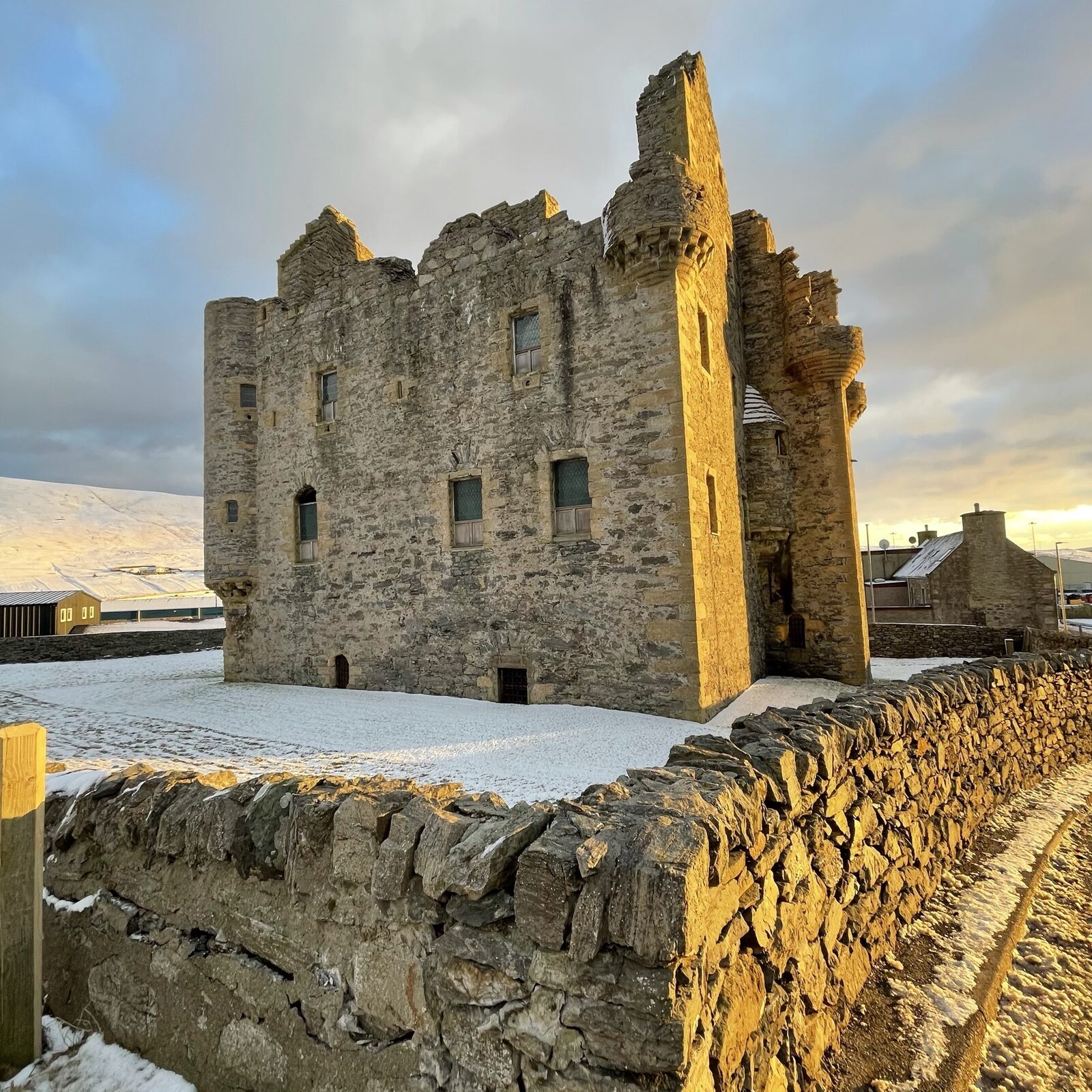
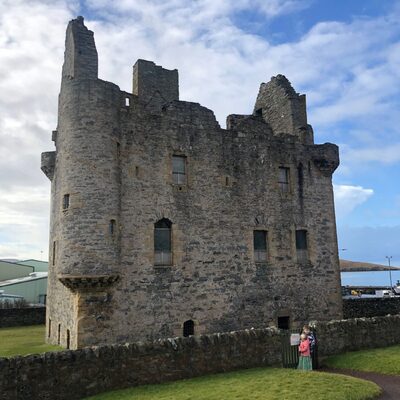
Scalloway Castle, built by tyrant Earl Patrick Stewart, Earl of Orkney & Lord of Zetland [Shetland], was completed around 1600. Earl Patrick, known as ‘Black Patie’, was detested in Shetland and Orkney and has gone down in history as one of the islands’ most wretched characters. Despite spending much of his reign in Orkney, he retained residences in Shetland, including the Scalloway Castle that now stands as a roofless ruin, dominating the village skyline.
This was a time of great suffering, punctuated by oppression and harsh, iron-fisted rule. Many of the stories of Black Patie are veiled with sinister speculations, and it isn’t easy to decipher what’s true and what’s a legend. Yet his name has gone down in history, and he’s often pegged as one of the most wicked villains in Shetland’s history. Displays inside the castle and museum tell the wider story of the infamous Stewart Earls.
Patrick was finally brought to justice in 1615 and beheaded in Edinburgh for crimes against both the people and the monarch.
After visiting the museum and castle, be sure to take a walk around the busy pier, home to much of the Shetland fishing fleet and a busy fish landing market.
Retail therapy
If you’re looking for a souvenir, there are a few shops that throng Main Street and beyond selling gifts and knitwear, including:
Harbour Knitwear
Scalloway Museum Gift Shop
Scalloway Meat Company
Dinner Options
Da Haaf Restaurant is a good option for an evening meal.
If you didn’t make it to The KB for lunch, this is also a brilliant place to have a meal – or maybe an after-dinner drink with a few of the locals.
And, if you fancy a takeaway: Hai Yang Chinese takeaway opposite the castle.
Other places worth a visit in Scalloway
Berry walk – heading north of Scalloway, the road up Berry runs parallel to the picturesque Tingwall Valley. Look out for ponies on this walk.
Tingwall Valley – Tingwall Valley is a stunning walk, particularly in summer when the wildflowers are at their best. The Valley is home to Asta Golf Course, Tingwall Kirk and the loch, a popular spot for trout fishing. The Valley is best experienced on an early summer evening.
Burwick – a small settlement that sits on the other side of Gallow Hill is an excellent area to walk – lots of interesting archaeology has been discovered here.
 Out now
Twice a year, to your door
One hundred and sixty pages of Scotland, every photograph commissioned, every word written by someone who went. Members get both issues posted and everything on screen.

 The Last Stop Before Nowhere
 A Weekend Exploring the Isle of Mull
 What's On in Scotland: Autumn and Winter