
Planning a Trip to Scotland
What to know when planning a trip to Scotland.
Words by Hidden Scotland
So, you’ve decided to holiday in Scotland. Great choice. It may be a small country, but its scenery, culture, history and hospitality are hard to match. If you want to make the most of your stay in Scotland, it’s a good idea to invest some time preparing well for your visit. This guide will take you step by step through the planning process in order to help you not only make the most of your trip to Scotland but to learn some practical insights along the way.
Step 1 - Decide where you want to go
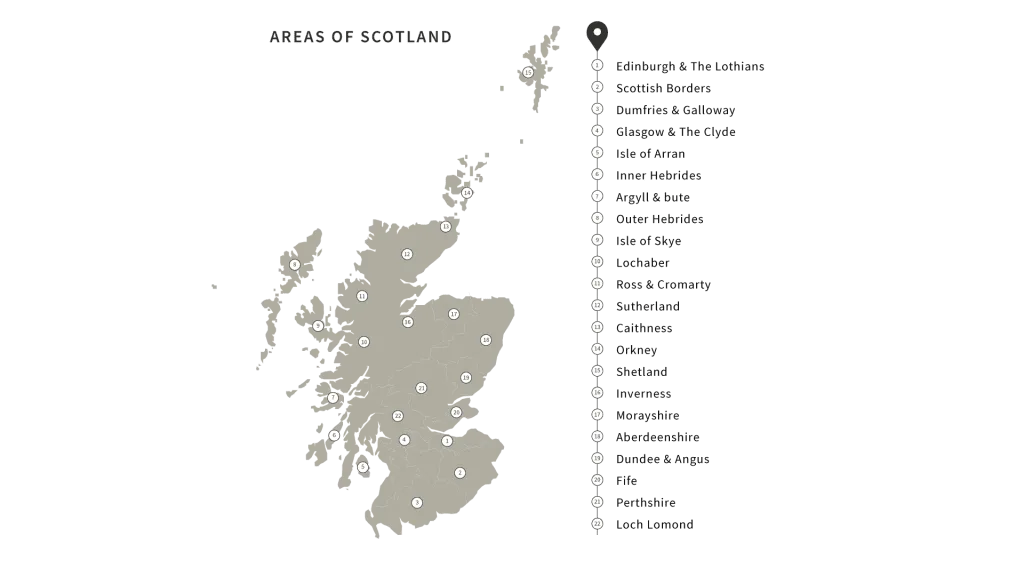
Scotland really does have it all, which can often complicate plans for the traveller. The country’s diversity is unlike any other, but in this lies its strength, because Scotland really can be meaningful for everyone. From the modern, cosmopolitan capital city of Edinburgh, to the sweeping hills and mountains of the Highlands where eagles soar thousands of feet above the ground; from the serene and mysterious lochs that have inspired myths and legends for centuries to the sparkling granite buildings of the ‘Silver City’, Aberdeen, every part of the country has its own history and character.
-full-1749383090.jpg)

All of this is a gift for the holidaymaker planning a trip to Scotland, because it empowers them to design a trip of their dreams. Whether you favour a city break, a hiking holiday, an adrenalin-rush of outdoor sports or a tour of history’s footprints on this tiny nation, you can choose the type of experience and memories you wish to take home and select your destination accordingly.
Build your transport and accommodation options around your destination – with ample choices of places to stay and ways to get around you won’t be restricted in where you wish to travel. After your research is done, you’re all set for a holiday that is certain to live long in your memory.
Step 2 - Decide when you want to go
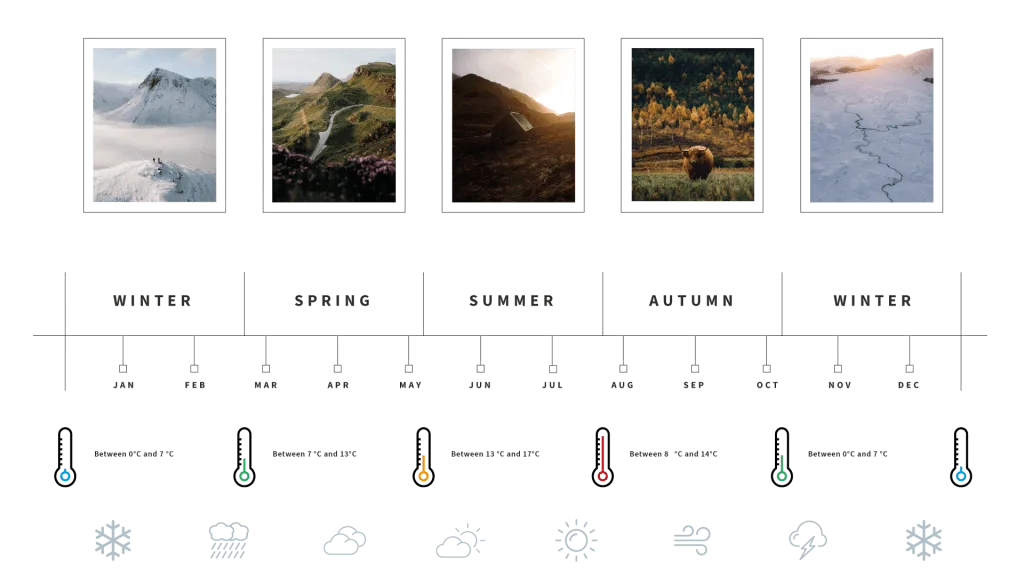
In Scotland, there is no ‘best time’ to visit, as every season brings with it a wealth of splendours and spectacles, each as fascinating and mesmerising as the others. In truth, choosing the time of year that you wish to travel depends on what you hope to see during your stay; from the snow-capped Cairngorms in deepest winter to the rich colours of autumn, or the temperate climate of spring to the excitement of the Highland Games in summer, every month offers something different that will engrave itself on your memory for years to come.
-full-1750069303.jpg)
Summer enjoys the finest weather, with daylight persisting until late evening and temperatures are warm but rarely uncomfortable. Rainfall is at its lowest, so this could be the best time to appreciate the untamed Scottish landscapes if your preference is to avoid the downpours. August is festival season, with sporting, music and comedy events taking place across the country, so book accommodation early. Remember that the school holidays, combined with the fairest weather, mean that tourist sites will be at their busiest, particularly in cities.
The Scottish winter is long, typically lasting from November until March, with short days and weather that ranges from overcast and dark to clear and crisp. Snowfall in the Highlands and Cairngorms offers the chance to enjoy winter sports for those seeking an adrenaline rush, while in sunny conditions the mountain ranges make for an impressive photo opportunity.
Remember that some tourist sites may close during winter and road conditions may complicate driving. Edinburgh’s Hogmanay is one of the best-known New Year celebrations anywhere, but it’s not just in the capital that the traditional Scottish welcome can be enjoyed: during the winter months, one of the best places to be is a friendly country pub tucked away in a tiny village, where Scottish ale or whisky can be enjoyed in front of a roaring open fire.
In spring, tourist sites tend to open around Easter weekend and there are often special offers to be grabbed at hotels and guesthouses. While tourist numbers increase, particularly during school holidays and over bank holiday weekends, you can generally avoid crowds, although dodging the showers is less likely as weather conditions can vary considerably. In spring, wildflowers transform the countryside, while in September and October the autumn landscape turns to a blaze of colour.
Step 3 - Decide on the length of your trip
Scotland may look small on the map, but don’t be fooled into thinking that you can easily tick off everything there is to see in a few days. The truth is that, such is the wealth of sites to see during your stay, that you’re simply not going to be able to ‘do everything’ before you leave for home. Whether you stay for a weekend, a week or a month, you’re likely to depart feeling that you’ve only scratched the surface – and hopefully you’ll yearn to return to continue on your adventure.
Most seasoned travellers would suggest a minimum of a week to ten days to enjoy a variation of what Scotland has to offer. However, there’s a temptation to set unrealistic expectations, even for a stay of a week or two: so, decide on your priorities before you even set off from home. What are you hoping to achieve in Scotland? To imbibe the cosmopolitan culture of Edinburgh or the warmth and homeliness of tiny hamlets hidden amid rolling hills? To stand on the precipice of a mountain, surveying the lochs and land in every direction below? Or to tread the footsteps of generations that have gone before you in ancient castles and Stone Age circles?
Attempt to do everything and you’ll risk departing feeling that you’ve somehow failed. Bear in mind that travel times around the country can be lengthy, so take this into consideration when planning your trip and allow additional time beyond what you’d expect in other countries. Remember that this is just one trip to Scotland – and hopefully the first of many.
Step 4 - Plan to slow travel
Slow travel can take us out of our comfort zones, teach us how to interact with new people, environments, and challenge us to get off our phones and actively seek out new experiences.
In a busy, social media-driven world, many of us crave time to switch off and spend our days doing things that do us good.
When we stop, close our eyes and listen when out in nature, something magical happens. The sounds of nature are worth stopping for.
Slow travel is a way of exploring a new place that not only enables you to absorb your surroundings and the culture, but also enhances your connection with the people who live and work there.
Browsing independent shops for local crafts, eating traditional food in cafes and restaurants and chatting to locals all let you connect with where you are instead of simply seeing it.
Without the constraints of a jam packed itinerary you are able to dictate the pace of your travel, spending more time focusing on the aspects of your journey that are important to you, rather than following what everyone else is doing. You can pick and choose your destinations and experiences at a pace that suits you, without the need to pack up and move on to the next place by a given time. Slow travel enhances your connection to the here-and-now and everything that makes a location unique: its people, food, culture, music and trade.
Timescale is an important factor when adopting the slow travel movement. Contrary to belief, slow travel doesn’t mean being on tour for three months while you explore every inch of the country. Slow travel works just as well for a week’s stay and it’s still fine to hop onto an express train to leap from Edinburgh to Inverness rather than trek the length of Scotland by road. Slow travel is a mindset, not a means of transportation.

By allowing yourself more time you will have the option to explore areas on foot or by bike. This method of getting around will increase your chances of discovering places that might not be listed in the guide books, therefore creating your own experiences and seeing a place with fresh eyes. If you are up against the restriction of set timescales and cramming in as many tourist attractions in a short timeframe, then you are more likely to miss out on these experiences. You may even return home after your trip feeling more stressed than when you first left.
You will also want to carefully consider the time of year that you travel to and around Scotland. Like most places the most popular travel season is in Summer when it is warm and when children are enjoying their school holidays. Although this is a lovely time to visit, if you want to fully reap the benefits of slow travel then the less popular travel months are your best bet. The quieter seasons can even allow for you to have the opportunity to enjoy some places all to yourself. This can increase the benefits of connecting with nature on another level and will leave you with memories that will be cherished for a long time.
Step 5 - Decide how much you wish to spend
Like most destinations, how much your trip to Scotland costs depends on how far you intend to stretch your budget. If you’re planning to curtail your spending and see Scotland for less, there are active steps you can take to keep your costs down. For example, consider wild camping – even for part of your trip – to enjoy cost-free sleeps; go slow to reduce the mileage on the car and limit the amount of fuel you use; take advantage of free attractions in the major cities, to avoid having to part with expensive entry fees; and choose public transport over private taxis, as fares are usually lower. Remember that prices in Edinburgh tend to be higher than in other locations. Also, when it comes to booking rail travel or entry to attractions, cheaper prices are usually available online in advance so, if you can plan ahead of time, you can potentially save significantly.
Step 6 - Make sure you have the required documents
Scotland follows the same entry rules as the rest of the UK, so check the latest requirements on gov.uk before you book.
Most visitors who don’t need a visa now need an Electronic Travel Authorisation (ETA) before they travel. This covers visitors from Europe, the USA, Canada, Australia and a number of other countries, and you apply for it online. British and Irish citizens don’t need one, and visitors from some other countries need a visit visa instead. Visitors from the EU, the EEA and Switzerland will usually need a passport rather than a national identity card to enter.
If you’re hiring a car, most visitors can drive on the licence from their own country, but check the rules on gov.uk before you travel, along with the hire company’s own age and licence conditions when you book.
If you fall ill or have an accident during your stay, emergency treatment at an A&E department is free for everyone. Other hospital care may be charged to visitors, although those who normally live in the EU, the EEA or Switzerland and carry a European Health Insurance Card (EHIC) don’t pay for necessary treatment. Either way, NHS inform advises everyone coming to Scotland to take out travel insurance with medical cover before the trip.
Step 7 - Plan how to travel to Scotland
Whether you’re travelling to Scotland from within the UK or overseas, good road, rail, air and sea links make the country easy to reach.
Plane
From abroad, flying is by far the quickest way to reach Scotland, and budget airlines such as easyJet fly in from across Europe. From North America, you can fly to Glasgow or Edinburgh, or connect via Manchester, Dublin or London.
(1)-full-1749388268.jpg)
Train
Arriving by train is relaxing and convenient. The fastest LNER trains from London King’s Cross reach Edinburgh in a little over four hours, and there are connections from cities across England and Wales to Glasgow, Inverness and Aberdeen. For a slower, more leisurely journey, the Caledonian Sleeper runs overnight from London Euston to Glasgow, Edinburgh, Aberdeen, Inverness and Fort William.

Ferry
From mainland Europe, overnight ferries sail from Amsterdam to Newcastle and from Rotterdam to Hull, leaving a drive north to Scotland when you arrive. From Northern Ireland, ferries cross from Belfast and Larne to Cairnryan, on the coast of Dumfries and Galloway.
Coach
A more cost-effective mode of transport that is particularly suited to those looking to save on their travel costs, coach services are provided by National Express and Megabus from destinations across the UK.
Car
From England and Wales, the M6 in the west and the A1 in the east are the main roads to the border, whether you live in the UK or are driving over from Europe.
Step 8 - Book your accommodation
Scotland offers a comprehensive variety of accommodation to suit all tastes and budgets, so you’re likely to be able to book that perfect retreat for your stay. Remember that accommodation can be in high demand at certain times of the year – for example, close to festival sites in the summer – so it pays to plan ahead.
For an upmarket stay, there are ample hotels in the major cities and throughout the countryside, from popular well-known brands to chic boutique residences. You’ll also find budget hotel chains offering no-frills but comfortable accommodation at a reduced price.
For an experience with a little more personal attention, a guesthouse or self catering accommodation could be the ideal choice for you. These smaller, economical options are commonplace in more rural areas as well as towns and cities that can offer a more homely feel than a larger, corporate hotel. Check what facilities and services are included when you book to make sure this is the right choice for you.
One of the most popular attractions in Scotland is the incredible, untamed landscape that never fails to impress at any time of year. Camping is not only a cheap alternative to a hotel or guesthouse stay, but also takes you closer to nature, enabling you to connect with the landscape more intimately. You can opt to stay in a registered campsite that offers facilities such as toilets and showers, or you can use Scotland’s wild camping rights to pitch your tent on most unenclosed land.
All you need to remember is to be respectful to the landowner and the environment: take all your rubbish with you; don’t light campfires in dry conditions; and try to choose quiet locations rather than sites that other campers have already claimed.
Step 9 - Research what to do en route to your destination
When you’re planning your journey to Scotland, and the places you’ll visit during your stay, bear in mind that travel times by car can be long, especially as the main routes may be winding and slow. Rather than watching your holiday disappear from the inside of a car, plan how you can maximise your time by combining destinations or sights – and allowing time to relax rather than feel you must cram every hour of every day with excitement.
If you’re driving to Scotland from or via England, the motorways to the border pass through some of England’s finest countryside. With the Lake District and Cumbria to the west and the rugged Northumbrian landscapes to the east, there are ample opportunities to break your journey en route, or even to spend a night in one of these locations before completing the drive to Scotland. Hadrian’s Wall, once the north-west frontier of the Roman Empire, also offers an opportunity to explore Europe’s history a short distance south of the Scottish border and is a perfect spot to break a long car journey.
Modern technology enables you to plan likely travel time between destinations; armed with this information, you can explore possible stop-off points along each route. If a diversion is needed to reach a specific attraction that you’d regret not seeing, consider if the extra mileage and travel time is justified, as well as the impact on the arrival time at your planned destination. But above all, remember that seeing and immersing yourself in the whole of Scotland just isn’t possible, even in a week or two, so perhaps focus on one or two regions in turn, exploring every nook and cranny there is to see, rather than tying yourself rigidly to long journeys that commit you to hours of tedious travel.
Step 10 - Research what to do in the area in which you are staying
In order to allow yourself a more enjoyable and stress free trip, it is best to carry out the majority of your research prior to setting off. Of course you will want to allow for being spontaneous and enjoying moments that you were unaware of prior to your trip. However, familiarising yourself with things to do in the area will mean you can make most of your decisions beforehand. It will also mean that you can get an idea on costs for your holiday budget and how to get to each place on your list.
Useful Time Saving Tips
1. Visitor recommendations are very helpful, so check out travel sites such as tripadvisor.com to learn about your destination and make an informed decision for your trip.
2. The internet hosts a wide range of tourist information sites, traveller blogs and local authority pages that will focus in detail on some of the places that you’ve probably never heard of. For example there are some useful tips on certain walks meaning that you can decide beforehand which route to take if there is something specific you would like to see on your journey.
3. In peak season, popular attractions can get busy so purchasing entry tickets online in advance can save time queuing on the day, as well as costing less than the ‘on-the-door’ price.
4. If you plan to use public transport to travel around Scotland, check out online timetables and print these in advance or download them to your phone. Knowing when and where to catch services is not only a great timesaver, but also minimises the chance of being stranded for hours on end (some rural bus and train services are infrequent and, in winter, may operate a reduced timetable).
Step 11 - Pack your bags
The main thing to remember when packing for Scotland is that the weather is somewhat unpredictable, at any time of year. You’re more likely to experience all four seasons in one day than in most other holiday destinations, so choosing your clothes wisely is essential.
Most importantly, if you are planning to venture outside during your stay, ensure you have enough layers to insulate against the wind. A rainproof coat or jacket is a must-have, even if the weather forecast doesn’t suggest rain is imminent. In summer, particularly, rain showers can quickly give way to sunshine and warmth, so pack some suitable lighter garments as well. If you’re planning to enjoy some lengthy walks, strong walking boots will help you to maintain your balance and grip on uneven ground.
In terms of equipment, lightweight and waterproof backpacks are ideal when venturing out and about, as well as bottles or flasks for drinks (depending on the temperature outside). If you plan to drive in Scotland, don’t rely on your mobile phone for directions, as the signal often drops in remote areas, so take paper maps (Ordnance Survey are the best) or download maps to your phone before you set off. Unlike in Europe, no specific equipment is mandatory in your car but, due to the remote nature of some parts of Scotland, an emergency tyre repair kit and warning triangle are advisable – but hopefully unnecessary.
Step 12 - Important information to know before you go
Like the rest of the UK, Scotland’s time zone is GMT or Western European Time (UTC). In summer, the country follows British Summer Time (GMT/UTC+1).
For emergency medical or police assistance while in Scotland, dial 999 or 112. Non-emergency medical assistance can be obtained by calling 111.
The currency in Scotland is the pound sterling, the same as in the rest of the UK. Three Scottish banks, Bank of Scotland, Clydesdale Bank and the Royal Bank of Scotland, print their own notes, and these are used side by side with Bank of England notes, so you can spend either. You can change money at post offices across Scotland.
The main shopping hours are 9am – 6pm between Monday and Saturday, although major retailers may open later. On Sundays, some smaller or independent stores may be closed, and larger shops may operate restricted opening hours.
If travelling from overseas, you’ll need a type G electrical adaptor for plug in appliances.
No vaccinations are required to visit Scotland.
WiFi internet is widely available in guesthouses, hotels, cafes, restaurants and in some public buildings.
In the Highlands, midges may irritate but won’t pose any danger. They can be deterred with an insect repellent.
The legal age to buy alcohol is 18. Shops, pubs and restaurants ask anyone who looks under 25 for proof of age, so carry ID if that might be you.
Tipping isn’t a big part of life in Scotland, but it’s common to tip in restaurants and taxis for good service, and around 10% is a good rule of thumb.
Tap water is clean and safe to drink.
In Scotland you must drive on the left hand side of the road.
Step 13 - Know how to travel responsibly
Scotland is unique, not only because it offers some of the most inspiring scenery in the Western world, but also because access to its open space is freer than in any other part of the UK. Whether you’re visiting to hike, cycle, camp, backpack or explore the sights at your leisure, you’ll enjoy greater freedom and easier access to the wild landscapes, giving you an in-depth appreciation of everything the country has to offer. However, with this freedom comes responsibilities: to look after the environment, to respect the rights of other people and to take ownership for your actions during your stay. The Scottish Outdoor Access Code outlines the steps that all travellers should take to ensure the long-term sustainability of the environment so that generations can continue to enjoy the magnificent scenery that Scotland has to offer.
Enjoying open access to the countryside
Undoubtedly Scotland’s greatest strength is its undeniable beauty, whatever the weather or season. But enjoying the landscape brings important responsibilities and it is well-worth familiarising yourself with these before setting off on your travels.
The right to access the countryside is enshrined in Scottish Law but with a caveat: respectful behaviour is expected. When hiking across open land, ensure you follow these simple rules:
Keep to designated footpaths and rights of way, where they are provided.
Only light campfires in open areas where this is permitted and never leave a fire unattended, especially in dry weather.
Where work on the land is taking place, such as farming, stay clear to avoid hindering it and keep a watchful eye for hazards such as farm machinery, felled logs or crop-spraying.
Stay clear of houses or other buildings so that the people who live there have their privacy.
As a rule of thumb, after you have left, the land that you have visited should be exactly the same as when you arrived. Anything that you have brought, such as food packaging, should leave with you and anything that was present, such as plants, should still be there. Bear in mind that it is illegal to uproot wild plants without the landowner’s permission.
Observing animals in the Wild
Scotland is home to a wonderful range of wildlife, some of it rare, so it is a perfect destination for wildlife spotters. While many of the animals will be accustomed to visitors passing-by, respectful behaviour will ensure that they continue to live peacefully in their natural habitats. When observing wild animals, do so from a comfortable distance. If you see their behaviour change in any way or if they notice your presence then you are too close. Slowly move away with as little noise as possible. Be patient and view them with binoculars instead of attempting to get as close as possible. Never feed animals in the wild, not only because human food can be harmful, but also because an animal that becomes acquainted with humans will find it challenging to survive independently in the wild. When driving, be on the alert for animals on the road, especially at night when they may appear suddenly. If you approach animals ahead, slow down, be patient and wait for them to move. A walking holiday in Scotland is perfect for dogs but they should not be allowed into fields where animals are present. Some birds nest at low levels in late spring, so dogs should be kept on leads in grasslands, forests, around lochs and along the seashore.
Step 14 - Camp and drive with care
Wild Camping and Bothies
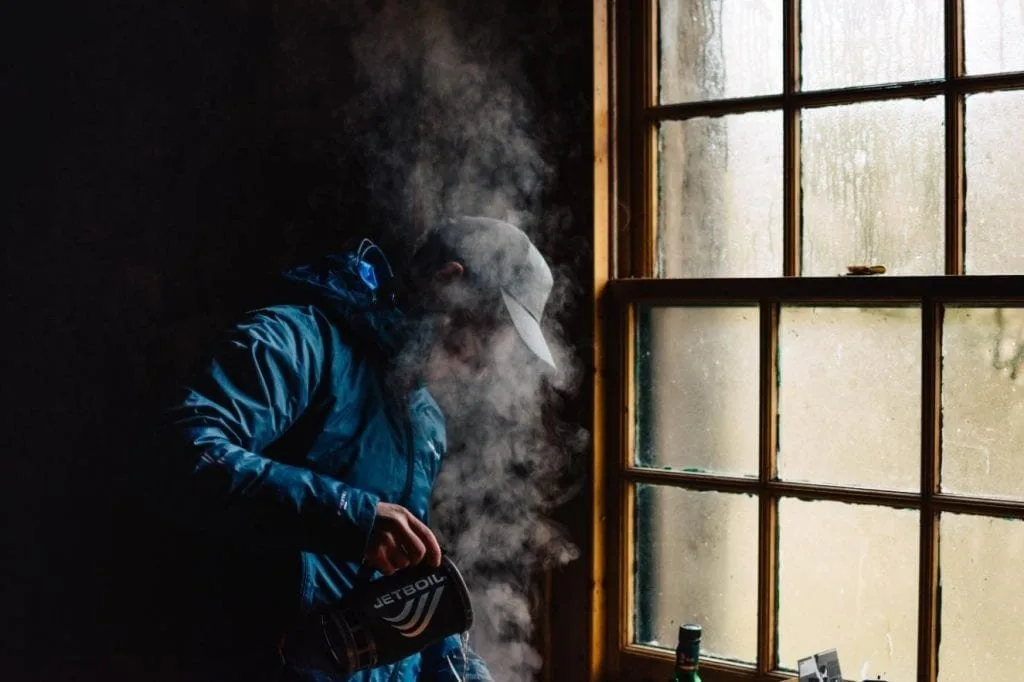
Scotland has a wide range of places to stay, but for a closer experience with nature, wild camping or sleeping in a bothy is hard to beat. If you’re wild camping, Scots law means you can pitch your tent on most unenclosed land, but steer clear of other campers to avoid overcrowding. The exception is the camping management zones on some of the busiest loch shores in Loch Lomond and The Trossachs National Park, where you need a permit to camp from March to September. Whether you’re wild camping or using a bothy you should still follow the outdoor access code and be respectful of the landowner and other travellers by leaving the site clean and tidy, not damaging trees, burying human waste away from water sources and clearing all litter before you leave. It is especially important not to leave food waste behind to avoid attracting vermin.
Safety first when driving
Driving in Scotland, either in your own car or a rental vehicle from one of the many hire companies you’ll find at airports and ports, is a perfect way to explore the countryside at your leisure. Wherever you live, bear in mind that driving laws may differ and Scotland’s road network, particularly in mountainous regions, may be more hair-raising than you are used to.
At all times, keep other people’s enjoyment of the countryside at the forefront of your mind.
Drink-driving laws are strictly enforced and punishments are severe. Scotland’s limit of 50mg of alcohol per 100ml of blood is lower than in England and Wales, so the safest choice is not to drink at all if you’re driving.
In rural areas, petrol stations can be few and far between so always ensure you have a plentiful fuel supply.
Remember that weather conditions can change suddenly, with rain, snow and wind all posing hazards to drivers. In winter, ensure that you are well kitted-out and that you modify your driving style to accommodate the weather conditions.
If you would prefer to reduce your carbon footprint during your visit, take advantage of the many environmentally-friendly options, including train and bus services, that operate across the country and can provide you with a cost-effective alternative to enjoying Scotland’s glorious scenery.
In short, Scotland is for all and the greater enjoyment is to be had when everyone takes responsibility for their own actions, acting positively to help to preserve the countryside for generations.
Step 15 - Enjoy your trip
Once your plans are made, all that is left is to enjoy the trip.
But however much preparation you make, it’s very likely that you’ll have questions during your stay. The best piece of advice? Ask a local. Most Scots will be happy to point you in the right direction.
 Out now
Twice a year, to your door
One hundred and sixty pages of Scotland, every photograph commissioned, every word written by someone who went. Members get both issues posted and everything on screen.

 The Last Stop Before Nowhere
 A Weekend Exploring the Isle of Mull
 What's On in Scotland: Autumn and Winter