
Beach bagging in Shetland’s South Mainland
The beaches of Shetland’s South Mainland, from St Ninian’s Isle to the surf at Quendale.
Words by Laurie Goodlad
Shetland is renowned for its beaches, and there are plenty to choose from. Whether you’re after pristine sandy expanses, hidden coves, exposed and weather-beaten peninsulas or just a little slice of the 1,000 miles of awe-inspiring coastline, you’re sure to find it in bucketloads.
Among the many beaches that make up Shetland’s spectacular coastline, several have been included in the national Beach Awards, part of the Keep Scotland Beautiful charity. These awards “are the benchmark for quality, celebrating clean, well managed and sustainable beaches.”
This guide explores the beaches of Shetland’s sweeping South Mainland.
Shetland’s southern peninsula is known for its wide bays and sandy beaches, and there’s no better place to kick off your shoes and dip your toes in the water. With around a dozen pristine sands, there is usually a quiet one to be found.
West Voe
West Voe, close to Shetland’s southernmost point, is also a site that demonstrates Shetland’s rich past with prehistoric evidence spanning millennia.
Along this pristine expanse of glittering white sand, some of the answers to Shetland’s past lay buried for centuries. Archaeological excavations on a shell midden – or rubbish heap to you and me – revealed evidence of Late Mesolithic people who were exploiting the shoreline for food. Radiocarbon dating placed the midden back some 6,000 years. West Voe was the first Mesolithic site to be discovered and dated in Shetland.
This fascinating beach demonstrates that people have been living off Shetland’s shores for at least 6,000 years.
Today, whether you are arriving or departing, this beach, sited beside the airport, is the perfect place to soak up some of Shetland’s fresh Atlantic air and a stiff sea breeze.
St Ninian’s Isle
This is perhaps the best-known of Shetland’s beaches – and rightly so – with an expansive sand tombolo, its sheer beauty will take your breath away. It is no wonder that most postcards of Shetland will bear a photo of this beach.
This 500-metre long expanse of pristine sand is pretty unmissable, and the tombolo itself is the largest active sand tombolo in the UK. Made up mostly of shell sand, the beach has formed since the last Ice Age retreated about 10,000 years ago. This has occurred through a process known as post-glacial rebound. Basically, as Shetland slowly sinks, sediment is deposited by the sea, creating the impressive bar that now connects the once inaccessible island (St Ninian’s) to the Mainland.
The beach leads to St Ninian’s Isle itself, famous for its 12th-century chapel site and the incredible discovery of one of Scotland’s greatest Pictish treasure hoards: the St Ninian’s Isle treasure. The treasure comprises twenty-eight pieces of highly decorated silverware (the main items are brooches, bowls and pieces of weapons) and a fragment of a porpoise’s jawbone. It is thought that the treasure is Pictish and dates to about AD 800, and the originals can be viewed in the National Museum of Scotland, with replicas on display in the Shetland Museum.
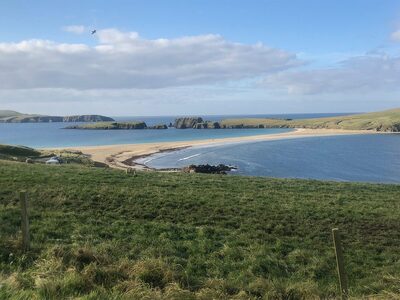
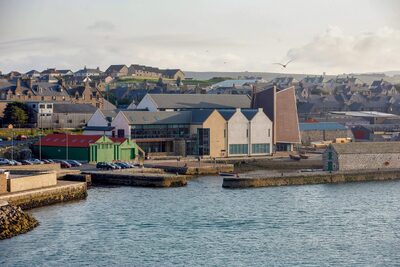
Both West Voe and St Ninian’s Isle have held a Keep Scotland Beautiful Seaside Award.
Quendale
Despite the abundance of beaches in Shetland, there are very few places where it’s possible to surf a good wave. Quendale Beach is one of the few beaches where surfers can pick up their boards and ride a wave.
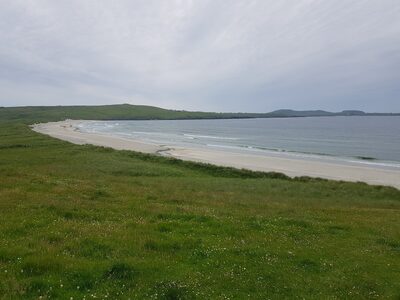
The beach itself won’t disappoint. At over a mile long, it’s one of Shetland’s longest beaches. With a southerly outlook and big views across the Bay of Quendale, this is the perfect place to walk down your lunch and kick off your shoes.
Rerwick & Scousburgh Sands
Rerwick and Scousburgh are two beaches that face each other in the Bay of Scousburgh. Rerwick is a beach best viewed from the road as there are often close to 100 seals hauled up, enjoying the sunshine. It’s best to leave this beach to the wildlife and, after enjoying watching the seals relaxing for a moment from the layby above the beach, head over to Scousburgh Sands.
Scousburgh Sands (sometimes called Spiggie Beach) is a beautiful white sandy beach that faces north towards Rerwick. Geologically speaking, it’s fascinating as it was formed by a mid-bay bar that grew close to what was the end of a long voe, eventually cutting off the voe and forming a dune and machair system. Behind the beach are impressive dunes and the Spiggie Loch, a favourite spot for birdwatching and trout fishing.
Levenwick
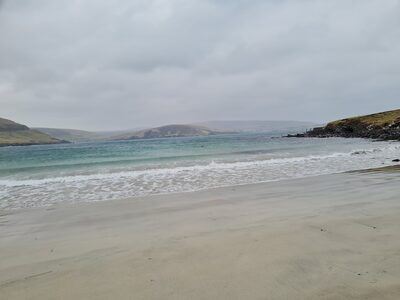
Levenwick is a favourite beach for sea swimming as it sits quietly in the sheltered arm of Levenwick Ness, avoiding the full force of the prevailing wind and swell. This makes it an ideal beach for families who want a paddle and the chance to explore the wonders of the shoreline.
Maywick
For drama, head to Maywick. This beach is like a great big hug from the surrounding landscape as the high-sided cliffs flank each side of the sandy shore. Facing the North Atlantic, Maywick looks across to the now uninhabited island of Havera that once supported a healthy community until the early 20th century.
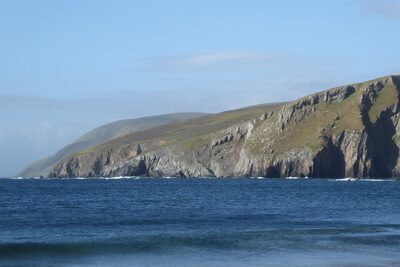
Maywick is also only a couple of miles from St Ninian’s Isle, and while most visitors are busy soaking up the tombolo, it is often empty. Maywick is a real treasure of the South Mainland.
However you choose to explore these fantastic beaches, remember to pack a hearty picnic and a strong sense of adventure.
 Out now
Twice a year, to your door
One hundred and sixty pages of Scotland, every photograph commissioned, every word written by someone who went. Members get both issues posted and everything on screen.

 The Last Stop Before Nowhere
 A Weekend Exploring the Isle of Mull
 What's On in Scotland: Autumn and Winter