
A day in Unst: five things to do
From Hermaness to Lund, a day on Shetland’s most northerly island.
Words by Laurie Goodlad
Unst is Shetland’s most northerly island, a two-ferry hop from the Mainland and home to about 600 people. Unst is rich in wildlife, geology and archaeology. It’s best to set out early and leave the island late to make the most of your trip – better still, spend a night or two in Unst to really make the most of everything the island has to offer. There are cafes, museums, a distillery, and plenty of beautiful walks and beaches for those who love the outdoors.
Hike to Hermaness National Nature Reserve
For those who love wild places and nature, Hermaness has it all. Hermaness National Nature Reserve is a walk that will take you over vast, open moorland to the coastal fringes of Britain’s most northern frontier, where you can view impressive gannet and puffin colonies. The views stretch across the North Atlantic. Muckle Flugga lighthouse is the final destination on the walk, precariously perched on a small rocky island. The lighthouse, built by Thomas Stevenson, is carefully built into the barren rock and has stood more than 150 years of assault from the unrelenting North Atlantic. Until 1995 it was the most northerly inhabited island – home to a lighthouse keeper throughout the year until the light became automated and the keeper moved out.
Visit the most northerly beach in the UK
Visit the most northerly beach and see the most northerly house in the UK at Skaw. Skaw Beach is isolated and remote, and the road leading from Norwick to Skaw is rutted and rough – incidentally, this unclassified road is also the most northerly in the UK. Take a walk around Lamba Ness and view some of the Second World War remains that made up part of a radar station.
Explore Viking Unst
With at least 60 known Viking longhouse sites, Unst is thought to have the highest density of Viking longhouses in Scandinavia. Believed to have been the first landfall for the Vikings in Shetland, Unst is the place for anyone interested in exploring Shetland’s Viking roots.
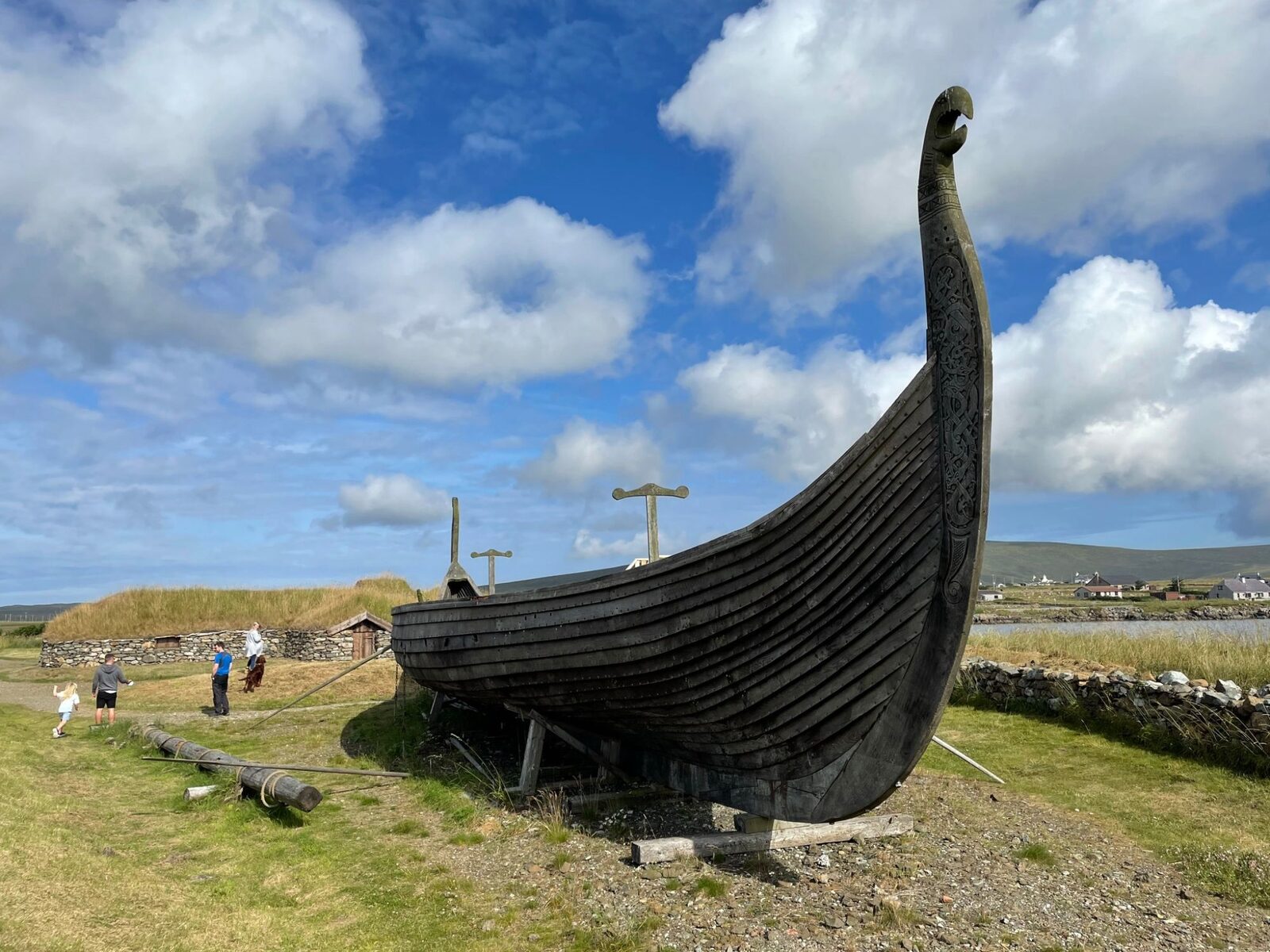
Visit the replica Viking longship, Skidbladner, and reconstructed Viking longhouse at Haroldswick and take a stroll down to the sands at the Eastings beach (Sandwick) to see the excavated remains of a Viking longhouse. Whilst there, look out for the curved doorway in the byre, an interesting architectural feature that allowed the cows to get in and out without having to have a very wide door.
Hike to Woodwick, Unst
For those who feel a little more adventurous and want to get off-the-beaten-track, lace up your hiking boots and walk to Woodwick, a beach on Unst’s exposed western coastline. Park at Baliasta near the southern tip of the Loch of Cliff before heading over the hill and down into the Dale of Woodwick. Along the way, you’ll see the remains of houses that now stand as roofless ruins, a reminder of the lives that were once supported in this unforgiving and remote landscape until the 19th century.
Visit Lund and the Westing
A few miles from Uyeasound, along the main road, take a right turn towards the Westing and Lund. On the way to Lund, you’ll pass an imposing standing stone. The Bordastubble standing stone dates to the Neolithic or Bronze Age and is Shetland’s largest and most impressive standing stone. This giant monolith stands at 12 foot high, dominating the gently undulating surrounding landscape. At the end of the road, the beach at Lund is an excellent place to have a walk and look out for seals. The graveyard at the ruined St Olaf’s church holds the remains of Viking graves from the 9th to 11th centuries. Within the graveyard is the final resting place of a Hanseatic merchant, Segebad Detken, who was laid to rest in the churchyard in 1573.
From Lund, take the other fork in the road towards the Westing. Stop along the way to view the remains of the Underhoull Broch, with its impressive ramparts and hilltop vista out to sea. Beside the Broch and down towards the shore are two Viking longhouses that help to tell Unst’s archaeological story. From here, follow the road until you reach the Westings beach – can you spot the small ruined booth on the island? This was once used as a fishing booth by the men who went to the haaf [deep sea] fishery.
 Out now
Twice a year, to your door
One hundred and sixty pages of Scotland, every photograph commissioned, every word written by someone who went. Members get both issues posted and everything on screen.

 The Last Stop Before Nowhere
 A Weekend Exploring the Isle of Mull
 What's On in Scotland: Autumn and Winter