
10 reasons to visit Shetland this autumn
Migrant birds, Wool Week, the northern lights and Atlantic storms: Shetland in autumn.
Words by Laurie Goodlad
Autumn is a time we associate with golden leaves, russet browns, crisp air and dew that sparkles and glistens in the sun with frost – perhaps not a time that we associate with Shetland, Scotland’s northernmost islands, renowned for its wild equinox gales, treeless landscape and a temperate climate that keeps most early frosts at bay. These things are all true, yet Shetland has a special allure in autumn – particularly for those who crave wild spaces and that feeling of sheer drama that comes from a brisk walk in an Atlantic gale. Here are ten reasons why you should visit Shetland in autumn.
To see the birds
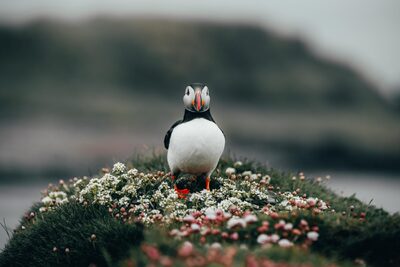
Shetland is one of the best places in the UK to spot autumn migrants in transit as they journey across the globe to other areas to overwinter. Shetland has many common and rare migrants, blown in from as far afield as America on strong westerly winds. They’re also brought in from Siberia on strong easterlies and, as Shetland is the only landfall for miles around, sightings of rare species are common. October is the best month for spotting migrants, and what better place to enjoy a spot of birding than with the stunning landscapes of Shetland as a backdrop. Frequent sightings of long-eared owls, redpolls and goldcrest are punctuated with rare sightings of birds such as the Siberian rubythroat or the enigmatic Siberian blue robin, amongst many others. Perhaps one of the most beautiful returns is the elegant long-tailed duck that overwinters in Shetland in nationally important numbers. Shetland’s reputation as one of the best places to spot rare migrants means that many birders and listers flock here – along with the birds – every autumn.
For a good overview of Shetland’s birds, including rare and common migrants, check out Discover Shetland’s Birds: A photographic guide to Shetland’s breeding, wintering and migrant birds, by Paul Harvey & Rebecca Nason. (Published by Shetland Amenity Trust).
Enjoy Wool Week festival
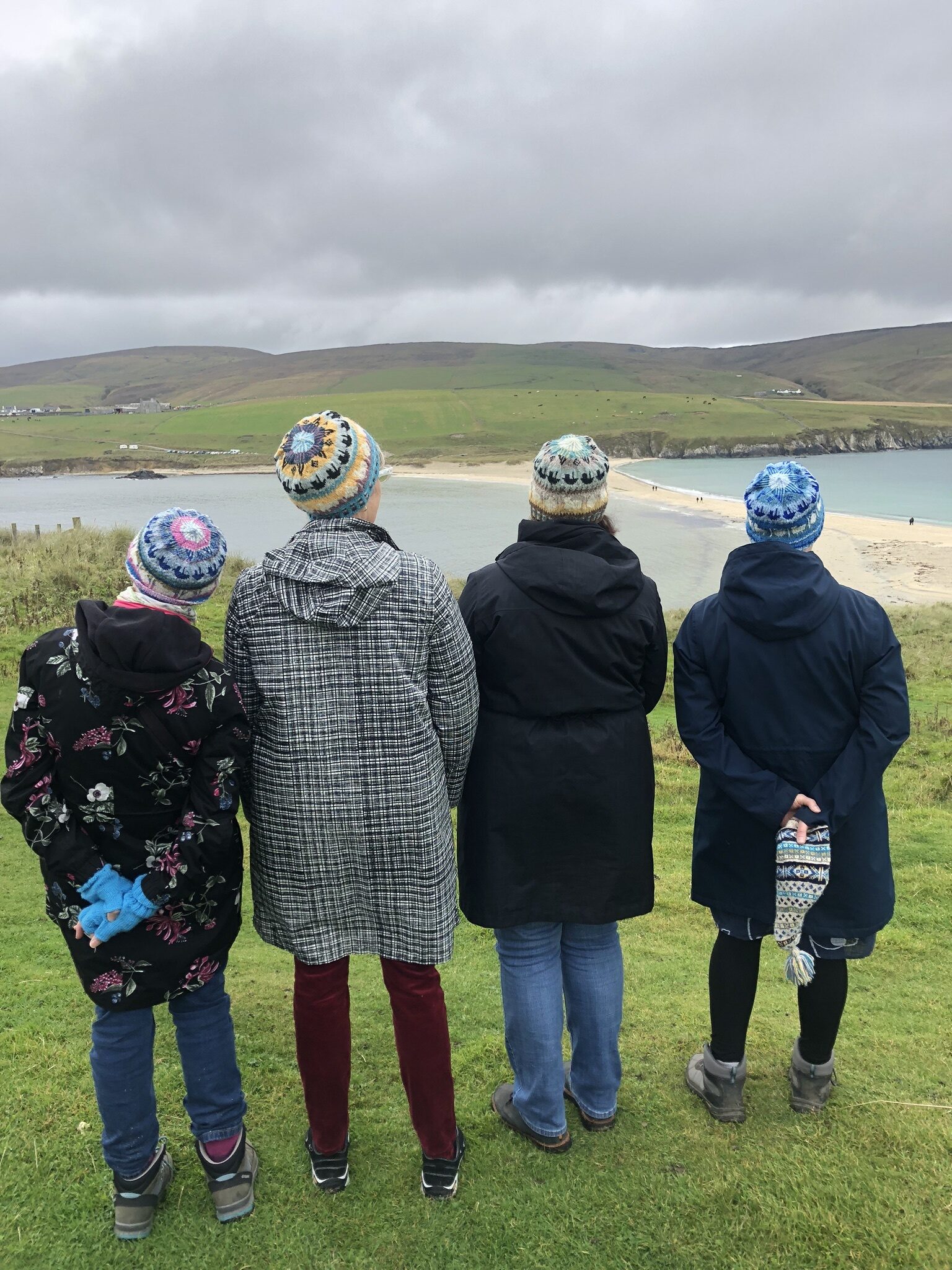
What do we associate most with autumn? You have likely answered that autumn is all about log burning fires, hot chocolate and cosy knits. Nothing screams autumn in Shetland more than the annual Wool Week festival, a world-renowned event, attracting thousands of visitors each year to celebrate the island’s knitting and textile heritage. With a packed programme of workshops, lectures, events, live music, and as much yarn as you can shake a sheep at, Shetland Wool Week has firmly stamped its mark on the world map of knitwear events. The festival showcases a range of different classes and events, including various subjects from weaving, spinning, dyeing, Fair Isle and lace knitting to jewellery making, farm visits and the infamous Sunday Teas – an island institution. Wool Week continues to promote and celebrate Shetland’s textile heritage.
Find out more about Wool Week online at www.shetlandwoolweek.com.
Seek out the northern lights
Shetland is the best place in the UK to spot the aurora borealis – known locally as the mirrie dancers. The northern lights are a phenomenon that occurs in polar regions and are one of the most spectacular displays in the night sky. Caused by activity on the sun’s surface, solar storms release vast clouds of electrically charged particles that become trapped in the Earth’s magnetic fields at the poles – what we are seeing are atoms and molecules in the atmosphere colliding with particles from the sun. The northern lights have inspired – and scared – people for thousands of years, and folklore tells us tales of bad omens, increased fertility and change that are brought with this nighttime phenomenon.
Philip Pullman’s novel Northern Lights describes them as great curtains of delicate light, pale green and rose-pink.
Although sightings of the lights can never be guaranteed, the best time to see them in Shetland is between mid-October and mid-March. However, and on a note of caution, don’t book to visit just to see them as you may be disappointed – cloud cover hampers many viewings throughout the winter.
You can keep up-to-date with aurora forecasts online via several websites.
Experience an Atlantic storm
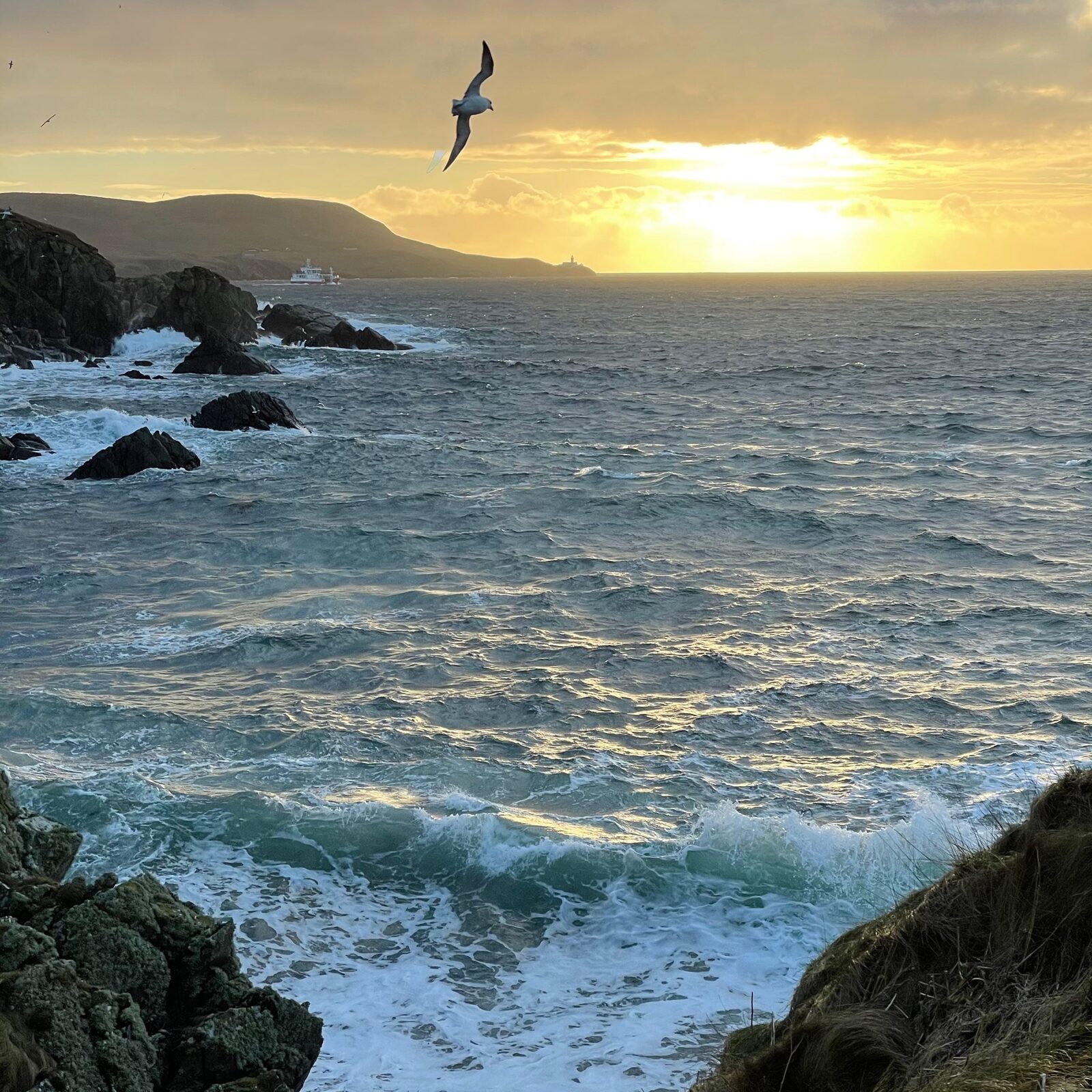
One of the most stimulating things that autumn offers is the wild storms, driven in off the Atlantic, bringing towering waves, gale-force winds and windswept landscapes. Although these storms can cause periods of disruptions and cancellations to passenger ferry sailings, they also provide the perfect opportunity to do some wave spotting and capture some stunning photos. Nothing beats the colour of the sea after it’s been kicked up by a strong westerly wind.
Please remember that it is dangerous to be close to the cliffs when wind speeds are high – always maintain a safe distance and respect the power of both wind and sea.
Enjoy the shifting light
Although Shetland lies in the track of Atlantic depressions that bring with them unpredictable and stormy weather patterns, it also experiences some fine weather in autumn; still seas, bright skies, crisp air and starry skies. In Shetland, islanders talk about ‘a day atween weddirs’ – or a day between weathers – this is when the wind dies, the sun breaks through, and the birds come out singing again. These changing weather patterns, combined with low autumnal light, and good air quality, bring a special light that dances across the landscape, creating beauty in the most unexpected corners and good clarity for miles – a photographer’s dream.
Space to explore
One of the best things about visiting off-season is that you will have the space to enjoy the dramatic landscapes, hidden beaches, and off-the-beaten-track walks without the crowds of summer. Summer is the most popular time to visit Shetland, and although it never gets as busy as parts of the Highlands, you’re still almost guaranteed to meet someone when you visit places like the cliffs of Eshaness or the sweeping sand tombolo of St Ninian’s Isle. Just like the seabirds fly off to pastures new come autumn, so too do the summer visitors, leaving many beauty spots deserted and free to enjoy in peace.
Take to the water
Wild swimming – or ‘swimming in the sea’ as we knew it as bairns – has really taken off across Scotland, and Shetland is no exception. With over 1,000 miles of coastline, there are plenty of sheltered places to swim, though never on a stormy day. Sea temperatures are at their warmest in late summer and early autumn, peaking in August and September at around 13℃. Autumn is also an excellent time to experience the mareel – or milky seas effect – caused by a luminous phenomenon causing the sea to glow translucently. This is best experienced at night when it’s dark and is a true wonder of the underwater world.
Have a mini-break at Busta House Hotel
Autumn is all about warm fires, cosy woollens and, perhaps, a warming whisky in hand. Busta House Hotel is the perfect place to cosy up for the night and enjoy a dram in their long room with its open fire and extensive whisky menu. The hotel itself is steeped in history – and home to a resident ghost (as all the best ones are) – and set within beautiful grounds. The building dates back to the 16th century, and all the guest rooms are named after Shetland’s islands. Busta is known for its warm welcome and fantastic hospitality and will provide the perfect base for an autumn adventure.
View their website at www.bustahouse.com.
Have a taste of Shetland
Autumn is also about good food; it’s a time for warming soups, thick stews and good, local food. Taste of Shetland’s annual Food Festival, organised by Shetland Food & Drink, celebrates the island’s local food and drink businesses and wider food heritage. Festival-goers can buy locally-produced delicacies directly from producers, sit back, and enjoy live cooking demonstrations from a host of local and internationally acclaimed chefs.
Find out more at www.tasteofshetland.com.
Spend less cash
Let’s face it, we all want to spend less cash, and what better way to do this than by visiting off-season. Shetland can be an expensive destination to see, and, come autumn, the overnight ferry has moved to its off-season timetable and demand for both cabins and flights is lower, bringing prices down too. You’re also more likely to find suitable accommodation as the summer crowds have moved on, leaving a greater choice of places to stay across the islands.
All in all, Shetland has so much to offer into autumn and beyond.
 Out now
Twice a year, to your door
One hundred and sixty pages of Scotland, every photograph commissioned, every word written by someone who went. Members get both issues posted and everything on screen.

 The Last Stop Before Nowhere
 A Weekend Exploring the Isle of Mull
 What's On in Scotland: Autumn and Winter