
St Columba's Bay – The Quiet South End of Iona
A day, from the ferry slip at Fionnphort and back.
The route
The south end of Iona is the wild half of the island, and far fewer people go there than to the abbey.
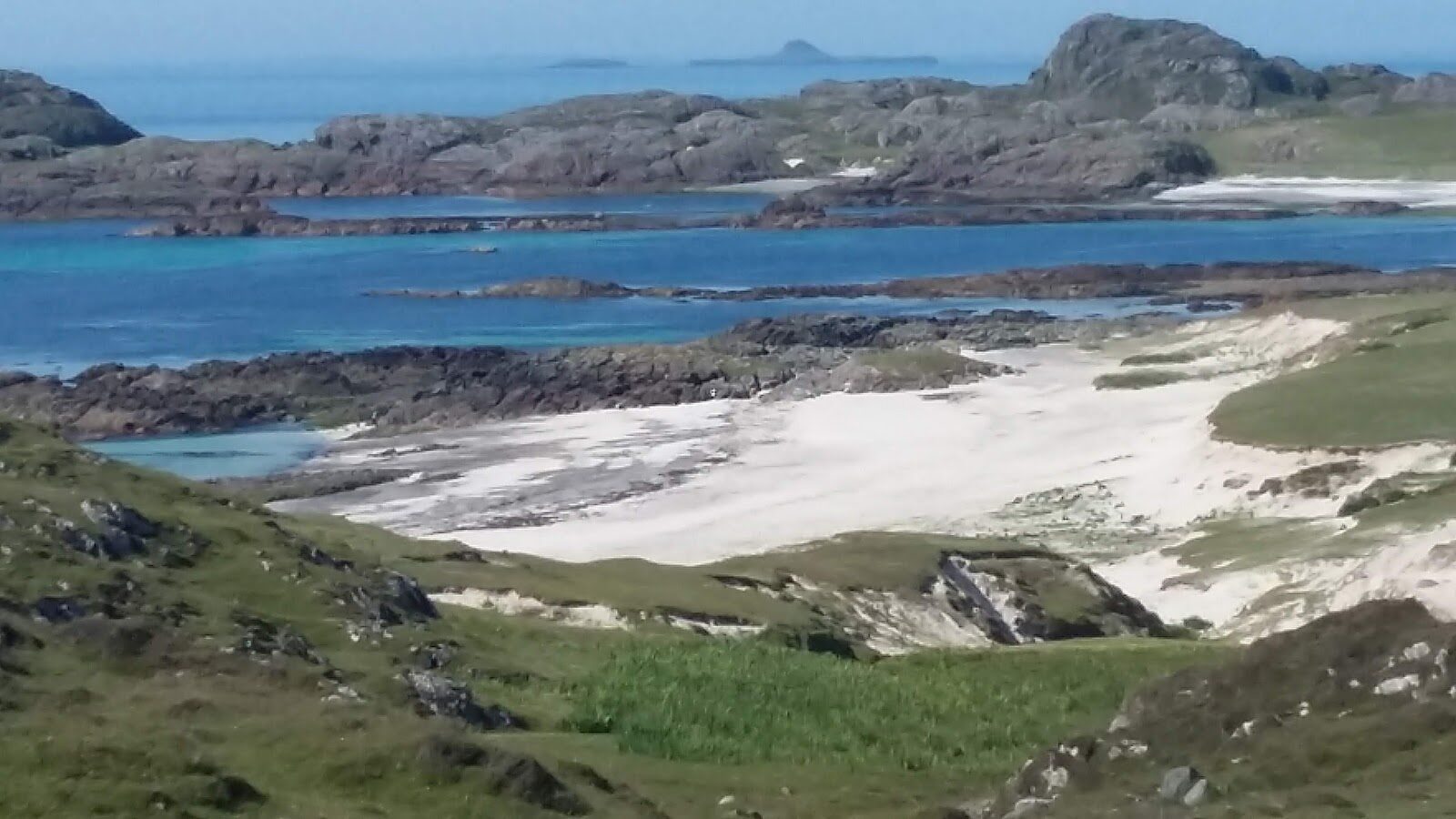
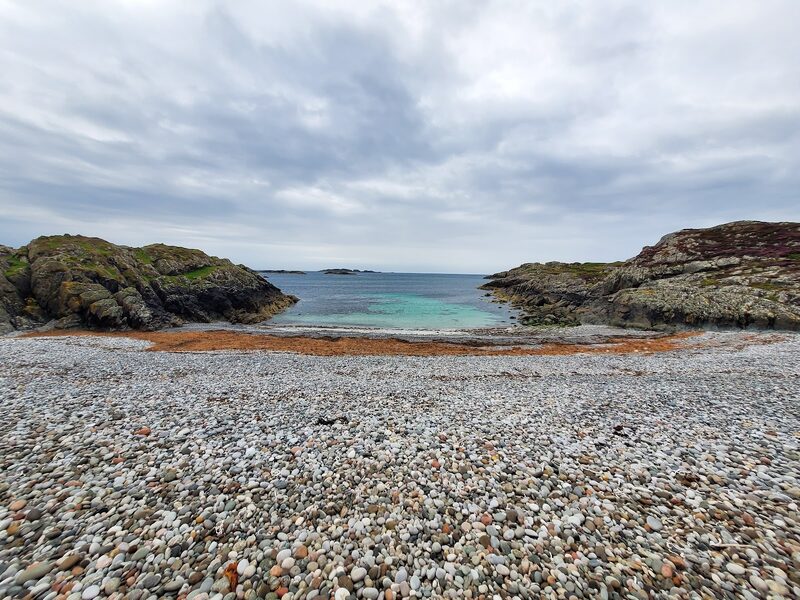
The walk crosses to the Bay at the Back of the Ocean on the Atlantic side, then goes south over rough, boggy moor to St Columba's Bay. That's the pebble beach where the saint is said to have landed from Ireland in AD 563. An old marble quarry lies near it on the south-east shore. Give it the better part of a day and bring all the food and water you need.
- Time
- Four to five hours: about 4 km, or 2½ miles, each way by the paths on the map, on rough and boggy ground.
- Distance
- About 5 miles on foot.
- The path
- Road and machair to the Bay at the Back of the Ocean, then rough, boggy moor with no made path and a beach of large pebbles. Not for wheelchairs or pushchairs.
- Where to start
- None on Iona: leave the car at Fionnphort and cross on foot.
- Set off
- From November to January take the 8.35am boat, and turn back for the jetty by 1.30pm.
- When to go
- All year, by the ferry's timetable, and best from March to October for the daylight. In winter the last regular boat back is at 4.30pm from Monday to Saturday, and every Sunday boat must be requested by 4pm on the working day before. No boats on 25 December or 1 January.
- Dogs
- On a lead: sheep and cows graze the whole way, and seal pups may lie on the beach.
- Children
- A long, rough walk for older children; cliffs at the marble quarry.
- Toilets
- None on the walk; public toilets by the jetty in the village.
- Before you set out
- The last regular boat off Iona in winter is at 4.30pm, Monday to Saturday, and every Sunday boat must be requested. The marble quarry lies under dangerous cliffs with no path to it.
Before you go
Book accommodation nearby
If you are staying over: here are ours nearest where the day starts and ends.
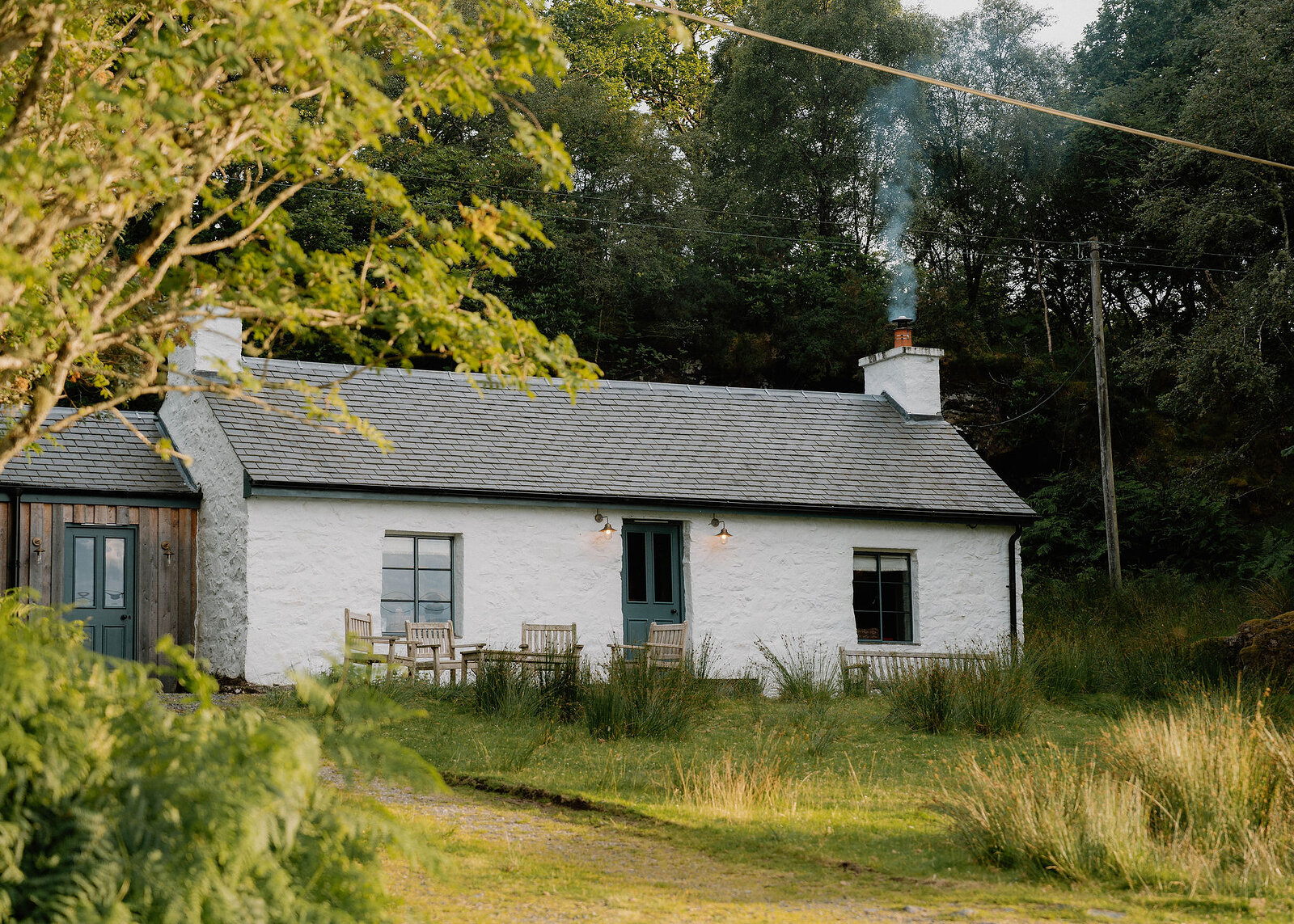
The nearest of ours is Fern Cottage in Croggan, 25 miles away. Sleeps 4.
The day
Iona on foot, south to St Columba's Bay
Over on the little ferry, across the island to the Atlantic bay on its west side, south over rough ground to the pebbles of St Columba's Bay, and back to the jetty in good time for the boat.
About six hours from Fionnphort, with both crossings
The ferry from Fionnphort to Iona
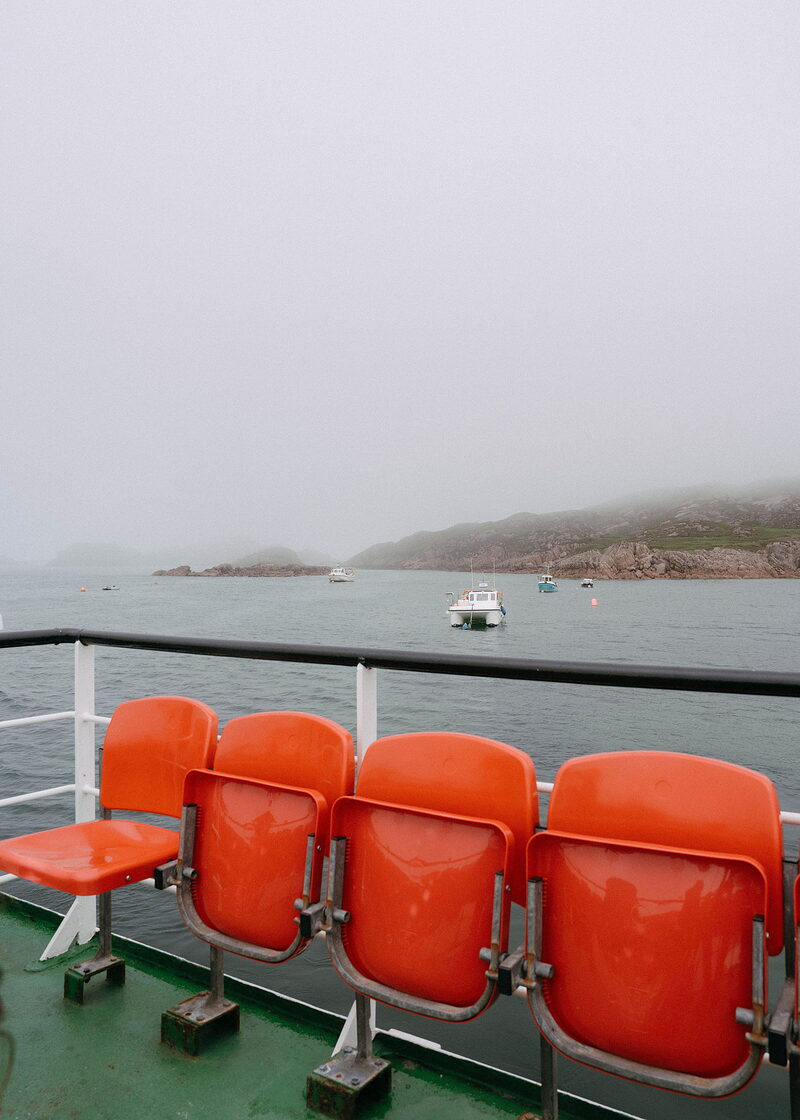
Iona is reached on foot. CalMac's small ferry crosses from the slip at Fionnphort, at the far end of the Ross of Mull, 35 miles and about an hour and ten minutes' drive from the ferry at Craignure. Visitors can't take a car over without a council permit, so leave it at Fionnphort, in the car park by the slip or on the street. Some of the parking there is charged, and the signs at each give the price. Buy the ticket online before you travel and be at the slip 10 minutes before the boat. An adult return was £4.80 in summer 2026, and the crossing takes 10 minutes. On the winter timetable, from 19 October 2026 to 25 March 2027, boats leave Fionnphort at 8.35am and 11am from Monday to Saturday. One more runs between them, at 10.15am on a Monday and a Saturday and at 9.45am from Tuesday to Friday. On a Sunday in winter every boat runs only if somebody has asked for it: ring CalMac on 0800 066 5000 by 4pm on the working day before, and ask for the boat over and the boat back. For a Sunday, ring on the Friday to be sure. Until 18 October the summer timetable applies, so read the times on CalMac's Fionnphort to Iona page. Wind can stop the boat: look at CalMac's service status page on the morning you travel. For this walk take the 8.35am boat from November to January. There are public toilets by the jetty on Iona.
About 1 hr 5 min on foot
St Columba's Bay
An attraction
The walk starts at the jetty in the village. Nobody who looks after this ground gives a length for it. By the paths on the map it's about 4 km, or two and a half miles, each way to St Columba's Bay. The going is slow, so allow four to five hours for the round. The first part is easy, across the island to the Bay at the Back of the Ocean, a wide bay of white sand on the Atlantic side with machair behind it, the grassland where the island's golf course is laid out. In a big swell a cave on its shore throws up spouts of spray. South of the bay the ground is rough, boggy moor with no made path, and the islands' own guide says to bring a picnic and plenty of water. St Columba's Bay is at the southern tip: a pair of beaches of large rounded pebbles, some of them green serpentine. The left-hand beach is Port a Churaich, the Port of the Coracle, where Columba is said to have come ashore. Atlantic seals breed on the small island offshore, so if you find a pup on the beach, keep well away from it and keep dogs on a lead. The marble quarry is a short way round the coast to the east, a narrow inlet where white marble streaked with green was cut until about 1918 and some of the old machinery still stands. It lies under dangerous cliffs with no road or path to it, only rough, wet ground, so go carefully or leave it out. Sheep and cows graze the whole way. From November to January, turn back for the jetty by 1.30pm at the latest.
About 50 min on foot
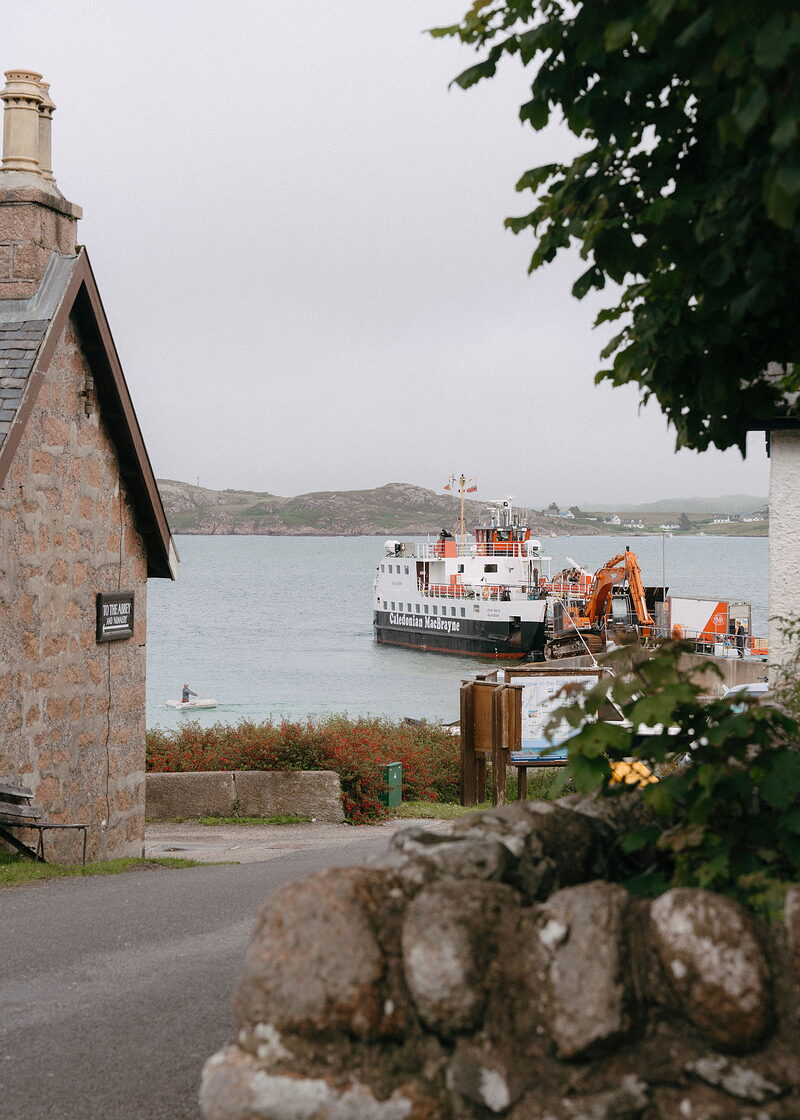
The ferry from Iona to Fionnphort
On the winter timetable, from 19 October 2026 to 25 March 2027, boats leave Iona for Fionnphort at 12.30pm, 2.30pm, 3.30pm and 4.30pm from Monday to Friday, and at 1pm, 2.30pm, 3.30pm and 4.30pm on a Saturday. The 4.30pm is the last regular boat off the island. A 6.15pm boat runs only if you ring CalMac on 0800 066 5000 by 4pm that day. On a Sunday the boats back are at 12.45pm, 3pm and 6.15pm, and each runs only if it was asked for by 4pm on the working day before. No boats run on 25 December or 1 January. Miss the last boat and nothing sails until the next morning, so be at the jetty 10 minutes before it leaves. Until 18 October the summer timetable applies, so check CalMac's page.
If it rains
The south end is open, pathless and boggy, and in rain or low cloud it's hard going with nothing to steer by. On a poor day walk only as far as the Bay at the Back of the Ocean, which is easy, and keep St Columba's Bay for a clear one.
Where to stay
For further reading, before you go.
Photographs by J C and Ewan Armitage via Google