
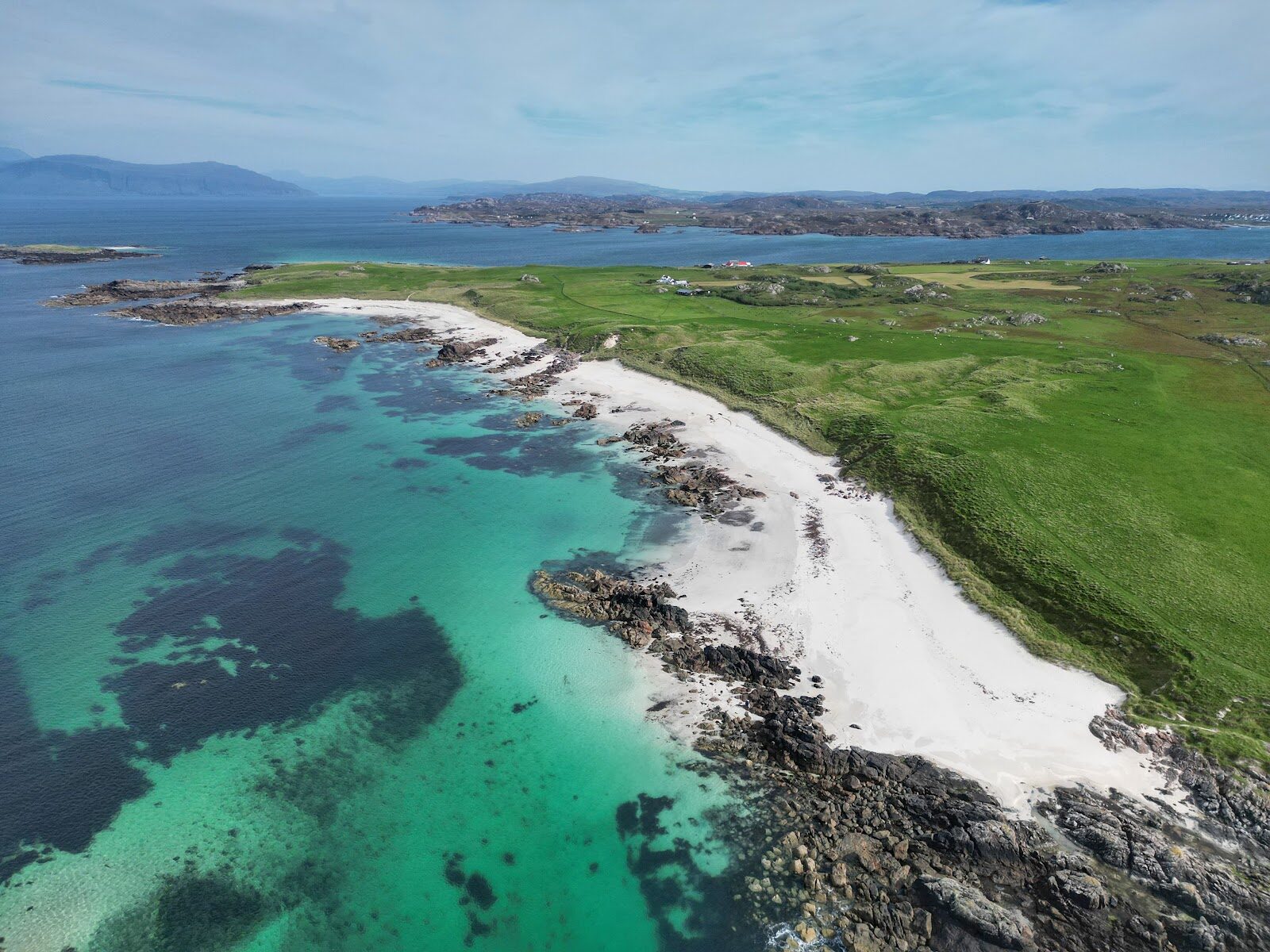
Iona's North End – White Sand and the Island's High Point
A few hours, from the ferry slip at Fionnphort and back.
The route
Most people who cross to Iona go to the abbey and back to the boat.
Keep walking north and the road ends at a gate, with grazing land and dunes beyond it running down to beaches of white sand and green water that face Mull and Staffa. On the way is Dùn Ì, the island's highest point at 101 metres, a short, steep climb to a cairn and a view over the whole island.
- Time
- Two to two and a half hours: about 7 km, a little over 4 miles, with 140 metres of climb.
- Distance
- About 4.3 miles on foot.
- The path
- Tarmac road as far as the gate at the north end, then grass, sandy paths and dunes. Dùn Ì is a steep, grassy and rocky path.
- Where to start
- None on Iona: leave the car at Fionnphort and cross on foot.
- Set off
- From November to January take a morning boat, and be back at the jetty by 3.30pm.
- When to go
- All year, by the ferry's timetable: in winter the last regular boat back is at 4.30pm from Monday to Saturday, and every Sunday boat must be requested by 4pm on the working day before. No boats on 25 December or 1 January.
- Dogs
- On a lead: cows and sheep graze the north end.
- Children
- A quiet road and sandy beaches; no swimming at the White Strand.
- Toilets
- None at the north end; public toilets by the jetty in the village.
- Before you set out
- The last regular boat off Iona in winter is at 4.30pm, Monday to Saturday, and every Sunday boat must be requested. The tides run fast at the White Strand and swimming isn't advised.
Before you go
Book accommodation nearby
If you are staying over: here are ours nearest where the day starts and ends.
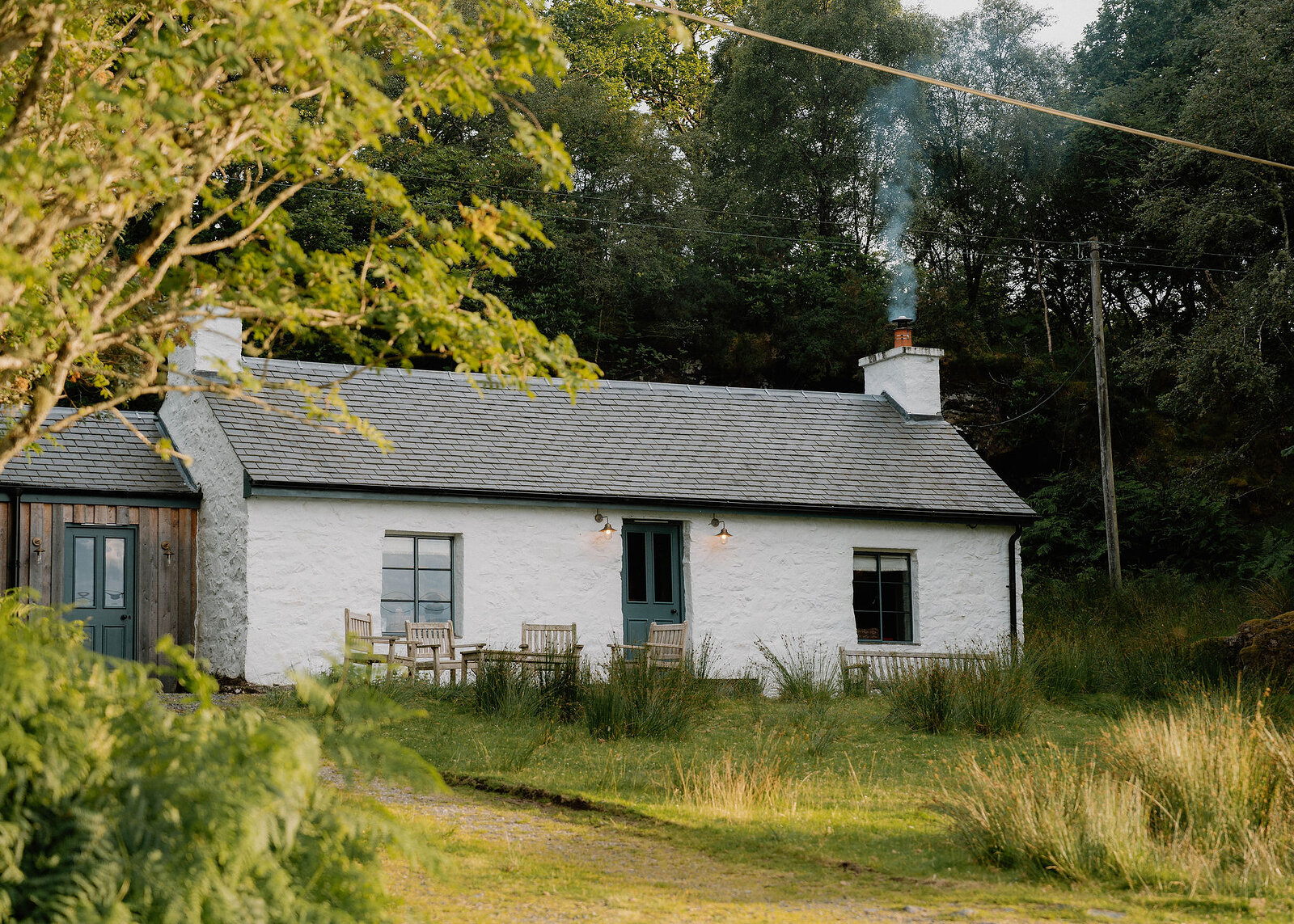
The nearest of ours is Fern Cottage in Croggan, 25 miles away. Sleeps 4.
The day
Iona on foot, north to the White Strand
Over on the little ferry, north past the abbey to the end of the road, up the island's one hill and down to the White Strand of the Monks, then back to the jetty for the boat.
About four hours from Fionnphort, with both crossings
The ferry from Fionnphort to Iona
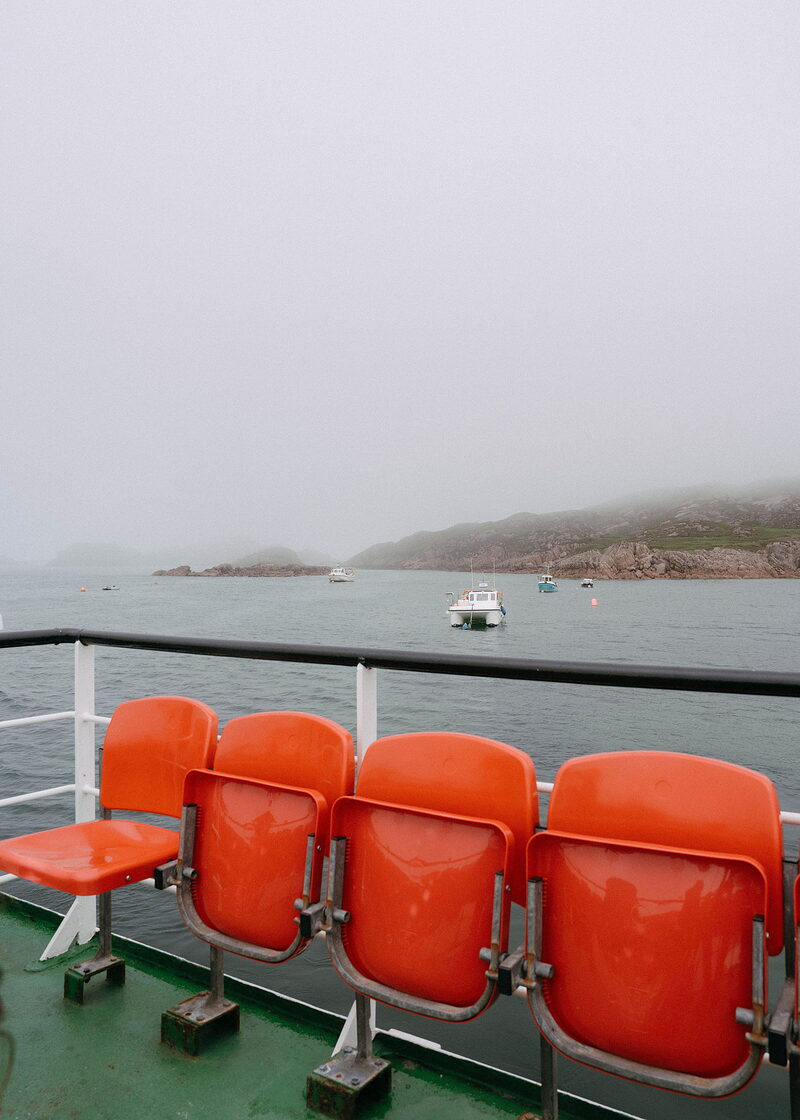
Iona is reached on foot. CalMac's small ferry crosses from the slip at Fionnphort, at the far end of the Ross of Mull, 35 miles and about an hour and ten minutes' drive from the ferry at Craignure. Visitors can't take a car over without a council permit, so leave it at Fionnphort, in the car park by the slip or on the street. Some of the parking there is charged, and the signs at each give the price. Buy the ticket online before you travel and be at the slip 10 minutes before the boat. An adult return was £4.80 in summer 2026, and the crossing takes 10 minutes. On the winter timetable, from 19 October 2026 to 25 March 2027, boats leave Fionnphort at 8.35am and 11am from Monday to Saturday. One more runs between them, at 10.15am on a Monday and a Saturday and at 9.45am from Tuesday to Friday. On a Sunday in winter every boat runs only if somebody has asked for it: ring CalMac on 0800 066 5000 by 4pm on the working day before, and ask for the boat over and the boat back. For a Sunday, ring on the Friday to be sure. Until 18 October the summer timetable applies, so read the times on CalMac's Fionnphort to Iona page. Wind can stop the boat: look at CalMac's service status page on the morning you travel. There are public toilets by the jetty on Iona.
About 45 min on foot
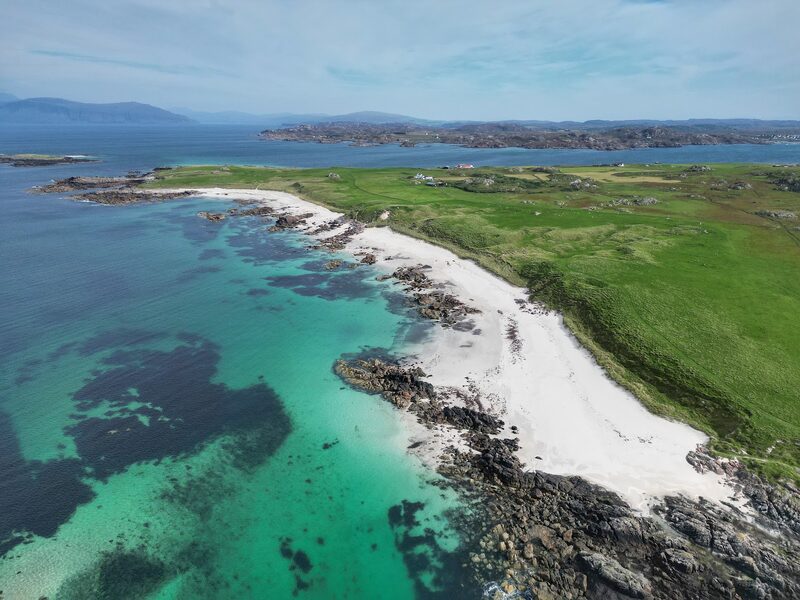
North End Beaches
An attraction
The walk starts at the jetty in the village. A walker's guide gives the round to the north end and back, with Dùn Ì on the way, as about 7 km, or a little over four miles, with 140 metres of climb. It allows two to two and a half hours. Most of it is a quiet tarmac road with hardly a car on it, north through the village and past the abbey to a gate where the road stops. Beyond the gate it's grazing land, sandy paths and dunes down to the beaches. The best known is Traigh Bhan nam Manach, the White Strand of the Monks, where Viking raiders are said to have killed monks of the abbey. The sand is white, the rocks are pink granite, and the view is across the Sound to Mull with Staffa and the Treshnish Isles out to the north. The tides run fast here and swimming isn't advised. Dùn Ì stands beside the road, signposted, and is only 101 metres high, but the path up is steep, grassy, rocky near the top and slippery after rain, so wear boots. A cairn marks the summit, and the Well of Eternal Youth lies in a cleft just below it. Leave the hill out and the walk is an easy one. Cows and sheep graze the north end, so keep dogs on a lead. From late October bring food and a flask. The village has a shop and places to eat, but they keep shorter hours in winter and none should be counted on without ringing first.
About 30 min on foot
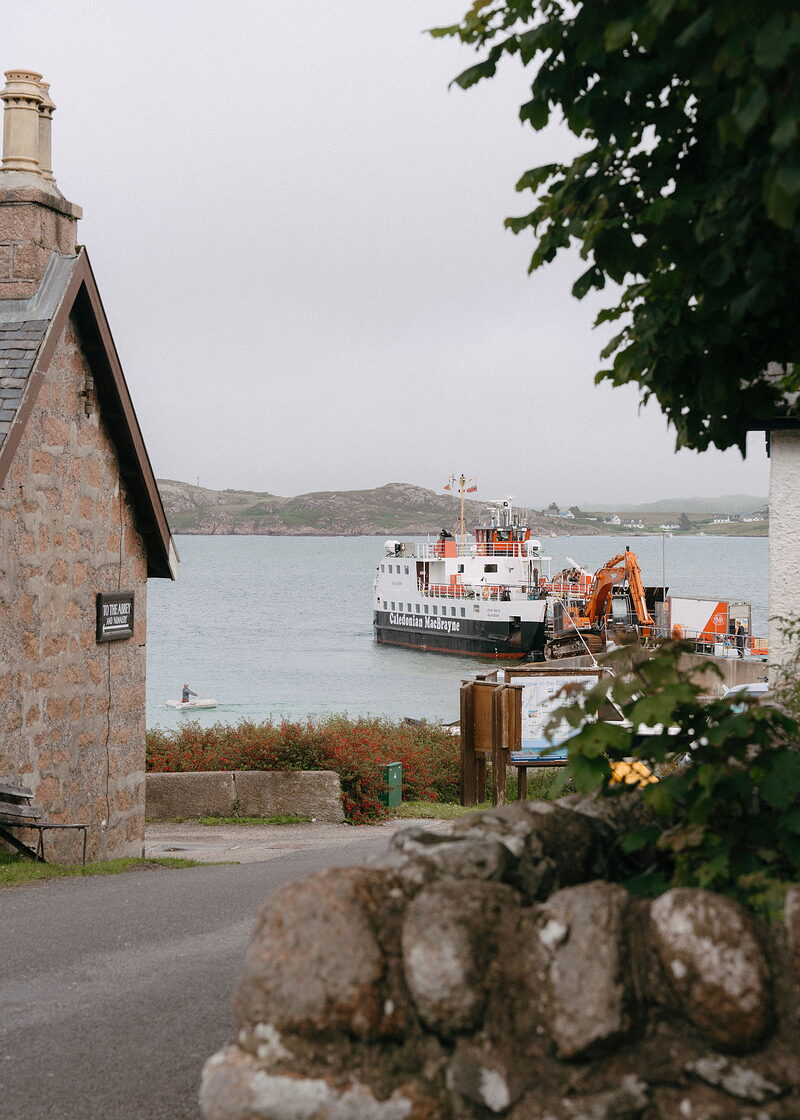
The ferry from Iona to Fionnphort
On the winter timetable, from 19 October 2026 to 25 March 2027, boats leave Iona for Fionnphort at 12.30pm, 2.30pm, 3.30pm and 4.30pm from Monday to Friday, and at 1pm, 2.30pm, 3.30pm and 4.30pm on a Saturday. The 4.30pm is the last regular boat off the island. A 6.15pm boat runs only if you ring CalMac on 0800 066 5000 by 4pm that day. On a Sunday the boats back are at 12.45pm, 3pm and 6.15pm, and each runs only if it was asked for by 4pm on the working day before. No boats run on 25 December or 1 January. Miss the last boat and nothing sails until the next morning, so be at the jetty 10 minutes before it leaves. Until 18 October the summer timetable applies, so check CalMac's page.
If it rains
The road north is easy in any weather, but Dùn Ì's grass and rock are slippery when wet and there's no shelter at the north end. On a wet or windy day leave the hill out, walk to the gate and the first beach, and check CalMac's service status before you cross, as wind is what stops the ferry.
Where to stay
For further reading, before you go.
Photograph by Kevin Newton via Google