
Contents


Loch Garten Nature Reserve
Scroll to explore
Lying in the wild heart of the Cairngorms National Park, this pine-cloaked RSPB nature reserve is a favourite of Hidden Scotland’s and a truly dramatic spot to witness the wonders of Scottish wildlife.
Among the Pines
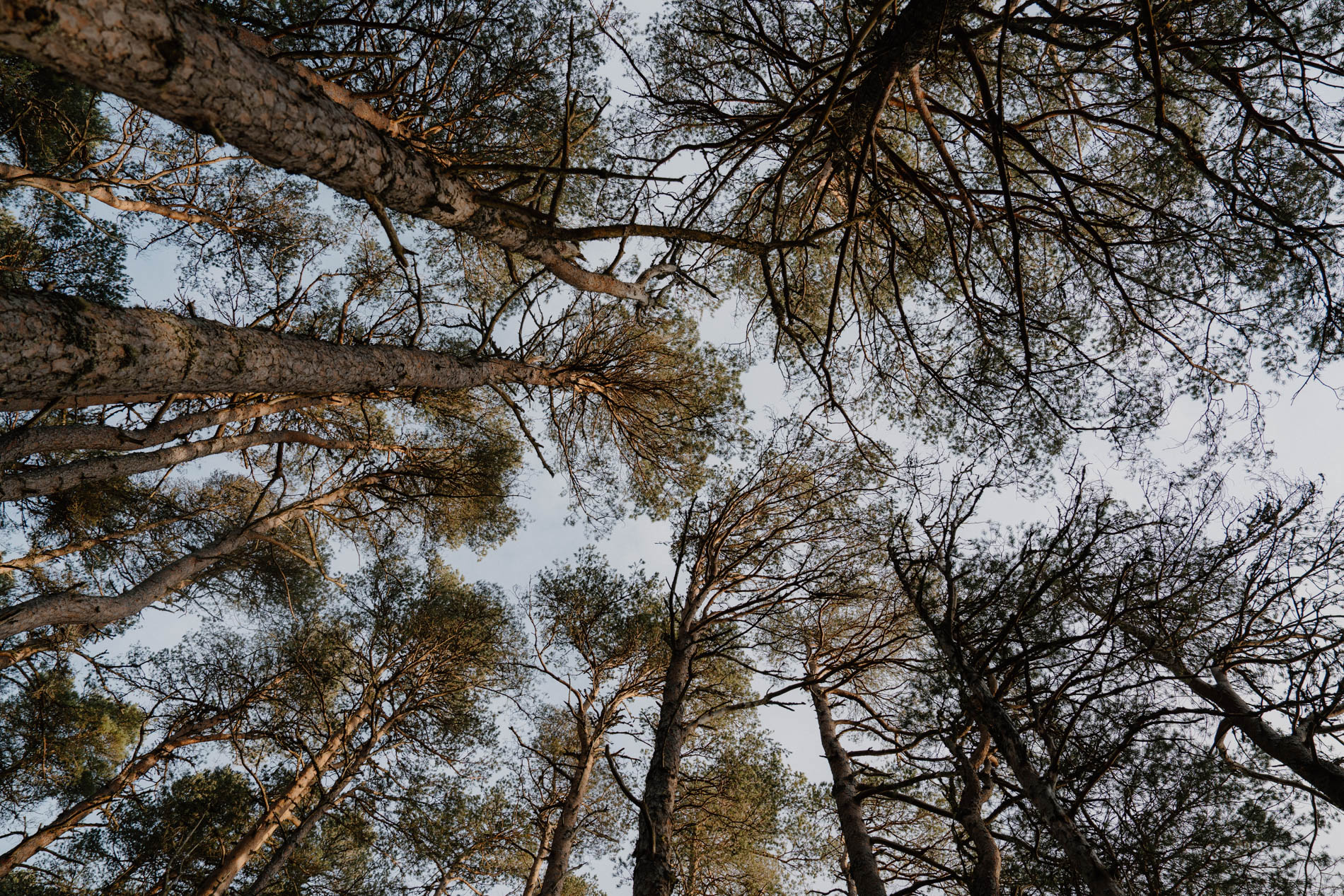
Abernethy Forest is a special place. As a remnant of the ancient Caledonian woodland that cloaked much of the Highlands after the last Ice Age, it stands as a world of twisting branches, hushed pathways and gnarled, age-old Scots pines. Rowan, heather, blaeberry, juniper, willow and birch all intermingle among the towering trunks, while outspread in their midst is the wide, calm expanse of Loch Garten.
This swathe of woodland and water provides a habitat for some incredible wildlife — which is where the Loch Garten Nature Reserve comes in. For more than 135 years, the Royal Society for the Protection of Birds (RSPB) has had conservation at its core, so when RSPB Scotland purchased the loch and much of the surrounding forest in 1975, it was a natural pairing. This magical waterside reserve now stretches to almost 35,000 acres (14,000 hectares).
For visitors, it’s a site to explore at an unrushed speed, a place to savour at length. It’s also very much somewhere to visit time and again, because as the seasons shift, so too does the array of local fauna.
The Return of the Ospreys
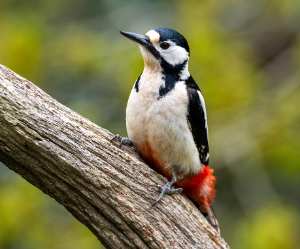
Spring and summer are famed for their ospreys, these noble birds of prey having bred here continuously since the 1950s, while other avian delights include tree pipits, crested tits, redstarts, great spotted woodpeckers, crossbills, siskins and even capercaillies. The warmer months are also a fine time to spot everything from bank voles and common lizards to that most charismatic of Caledonian Forest residents: the bushy-tailed, bright-eyed red squirrel.
Insects play a crucial — and fascinating — role here, too. Dragonflies and damselflies both emerge in the warmth of summer, including distinctive dragonfly species such as four-spotted chasers and white-faced darters. And at ground level, wood ants colonise the forest floor in towering nests that can reach a metre in height, playing home to some 250,000 ants.
Not all insects are so readily visible, however. The rare pine hoverfly, an important pollinator found only in mature pineforests like this, is seldom seen but remains a focus of the RSPB’s conservation work. The larvae of this hoverfly thrive in water-filled holes on old pine stumps, so deadwood habitats have been created — complete with drilled holes —to ensure the species’ survival.
Top tips for spotting osprey
Top tips for spotting osprey
As the Seasons Turn
Each and every season of the year on the reserve tells a story. Autumn and winter hold their own rewards in the form of overwintering wild greylag and pink-footed geese, handsome birds that descend on the loch in numbers each dusk. The presence of so many huge evergreen Scots pines gives the reserve a rich atmosphere regardless of the month, and while the RSPB’s excellent on-site Loch Garten Nature Centre is open from 1 April to 31 October, there are ample reasons to come calling year-round.
This is very much helped by the events on offer. The reserve’s guided Winter Tree ID walks, for example, will hold appeal for anyone with an interest in the great outdoors, highlighting the importance and folklore of the reserve’s mighty Scots pines. Participants will even get the chance to benefit directly from the trees’ needles, by sampling Vitamin C-rich pine tea. Responsible foraging for personal consumption is also encouraged!
Listen to the sounds of a great spotted woodpecker
Other happenings throughout the year include a dawn chorus walk — a chance to immerse yourself in the soul-lifting swell of Highland birdsong that accompanies first light in spring — and similarly rewarding early-morning encounters in the form of the reserve’s popular Breakfast with the Ospreys events.
Pine needle tea
Pine needle tea is a simple, vitamin-rich drink made by steeping fresh or dried, washed needles—ideally using Scots Pine—in hot water for 10–20 minutes. Use roughly 1/3 cup of chopped needles per 2 cups of water, strain well, and sweeten with honey or lemon if desired.
Exploring on Foot
Part of the appeal of Loch Garten and Abernethy Forest is the breadth of activities that can be enjoyed here. As well as the obvious delights of walking through the reserve — whether alone, in a group, or with a dog (although ensure they’re on leads and away from the loch between April and August, to protect nesting capercaillies and dotterels) — there are other ways of enjoying the surroundings to the full.
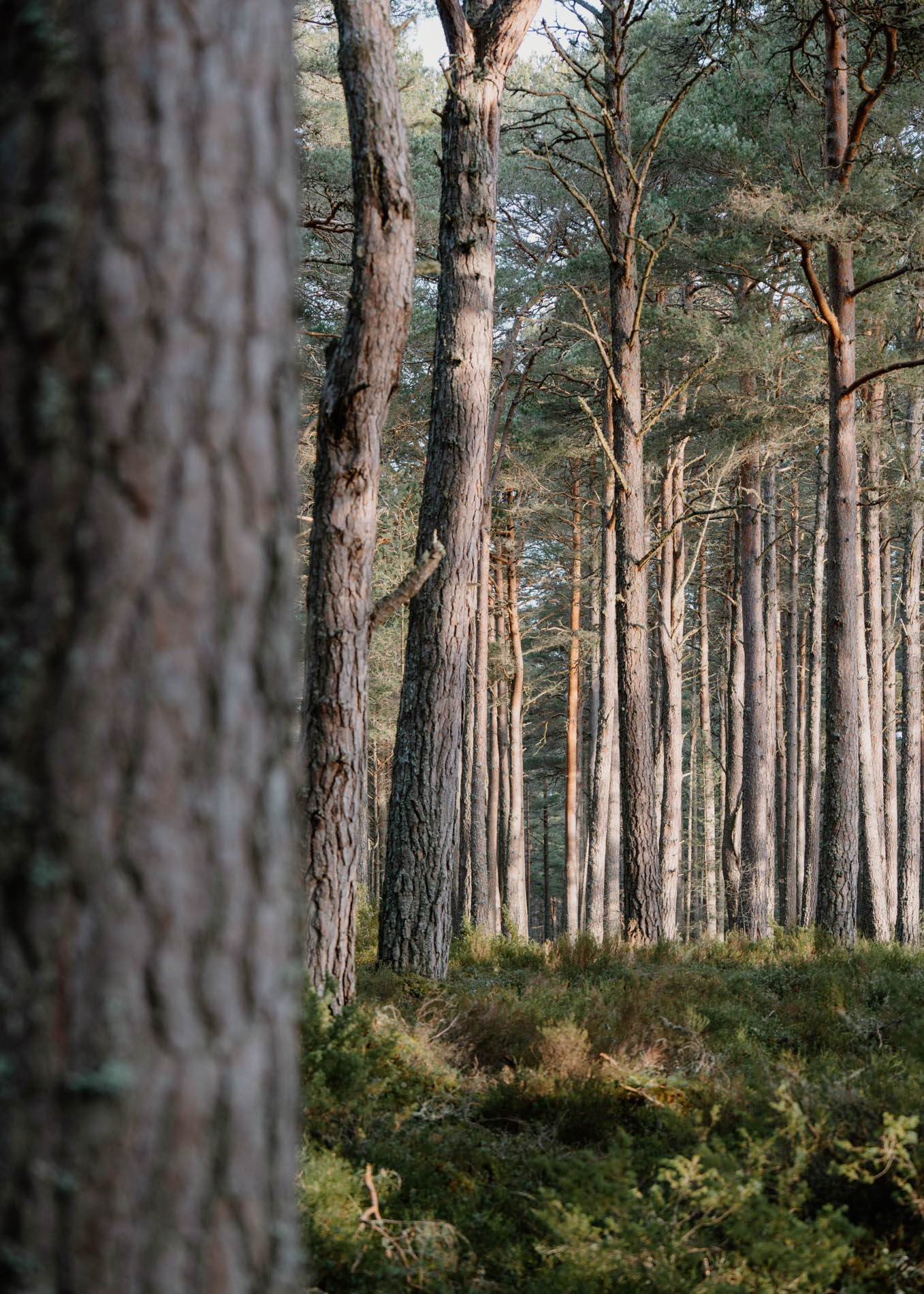
Birdwatchers will be in their element, of course, but so too will cyclists, who have options for gentle, two-wheeled exploration both inside and around the reserve. The loch itself sits quietly within the forest, its dark waters edged by long-established Scots pines. Some of the ‘granny pines’ here have been standing for around four centuries, which reminds you just how long this forest has been here.
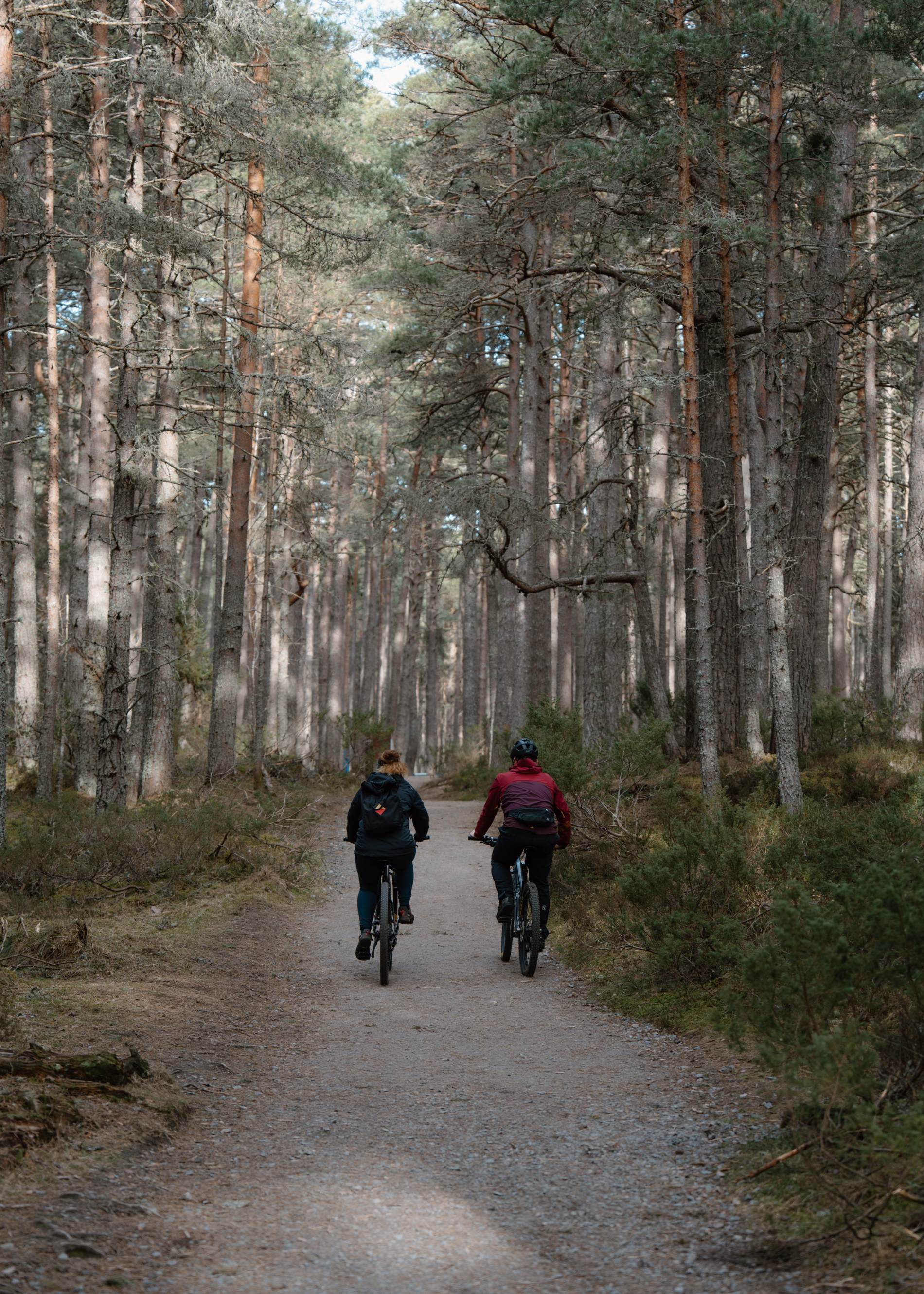
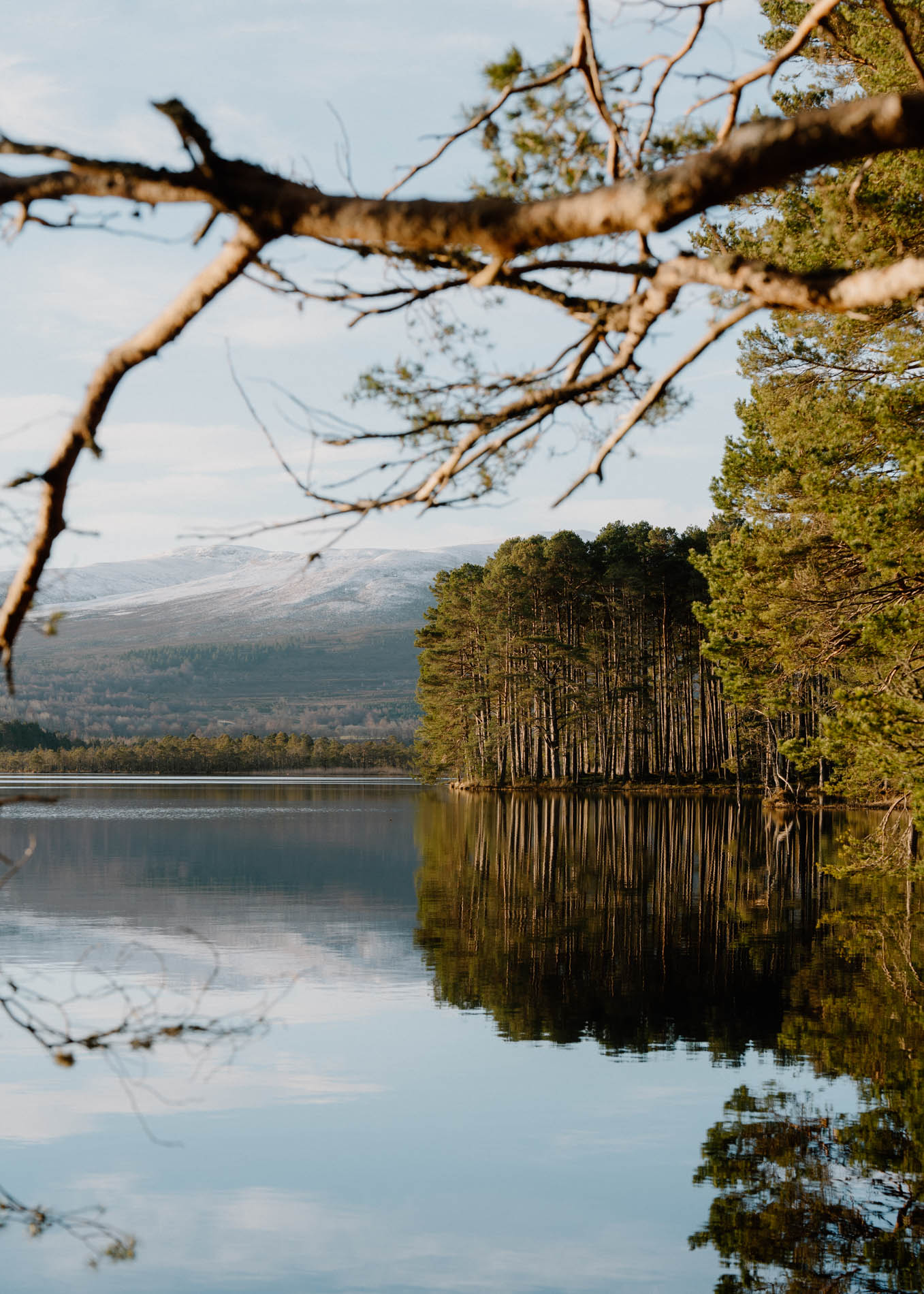
Several of the paths that thread through the reserve are accessible to all, including the winding nature trail that leads directly to the Loch Garten Nature Centre. The nearby Two Lochs Trail is another fine option — the path is mainly wide and firm — and it gives deep views not only across Loch Garten itself but also the adjacent Loch Mallachie.
Listen to the sounds of Loch Garten at dawn
The link between nature immersion and wellbeing has long been well documented, but here in the wildlife-rich landscapes of the Cairngorms National Park the connection is powerfully strong. Simply inhaling lungfuls of the reserve’s cool, pine-scented air can feel life-affirming, while the living, breathing biodiversity of this ancient forest — birds, bugs, woodland and all — is an extraordinary thing to savour.
Local partnership Cairngorms Connect, committed to a long-term enhancement of the habitats and ecology of the wider National Park, states emphatically that ‘wild nature is good for people’, and this endlessly enchanting RSPB reserve is a fine case in point.
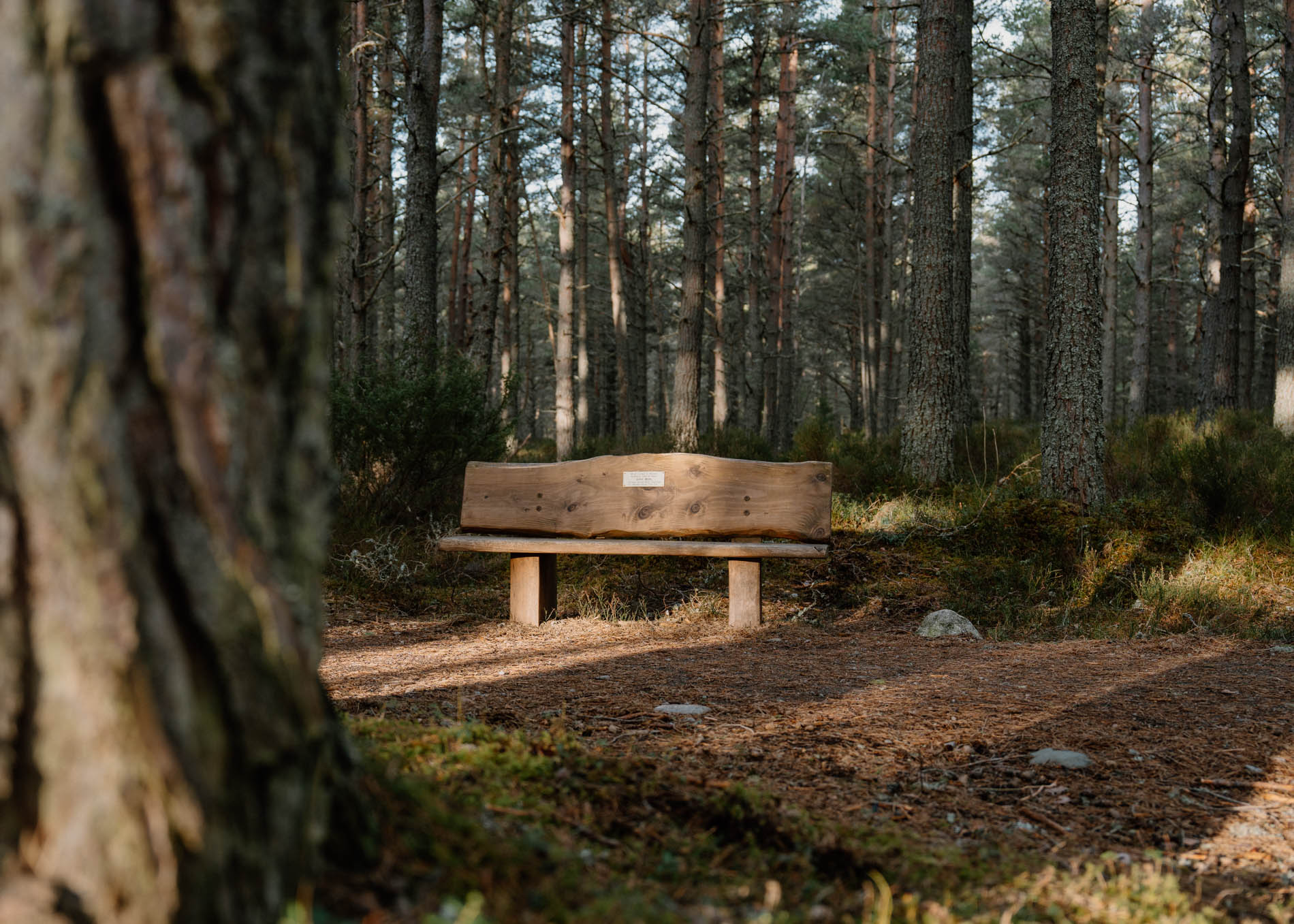
This feature is a paid collaboration with RSPB and VisitScotland. If you want to learn more about this reserve and the other 76 RSPB Scotland looks after, go to www.rspb.org.uk/days-out/visit-scotland.






 Sign in with Google
 Sign in with Email